Comparison
Aluminium colour vs uPVC foil for the same shade: which suits your home?
Short answer
Powder-coated
powder coating: Powder coating is a finish made by applying coating powder to a prepared metal surface and curing it to form a protective coloured layer. The quality of preparation and the specified coating system matter. A colour name alone does not establish suitability for coastal exposure, strong sunlight or a particular maintenance routine. More on powder coatingfoil
foil (woodgrain): A woodgrain foil is a decorative surface layer bonded to a profile, commonly used on uPVC windows and doors to imitate painted or stained timber. It describes the finish, not the frame material. Texture, colour, corner joints and matching trims all affect how convincing the result looks on a real building. More on foil (woodgrain)Planning this? Get a free, no-obligation installer recommendation
What changes the decision?
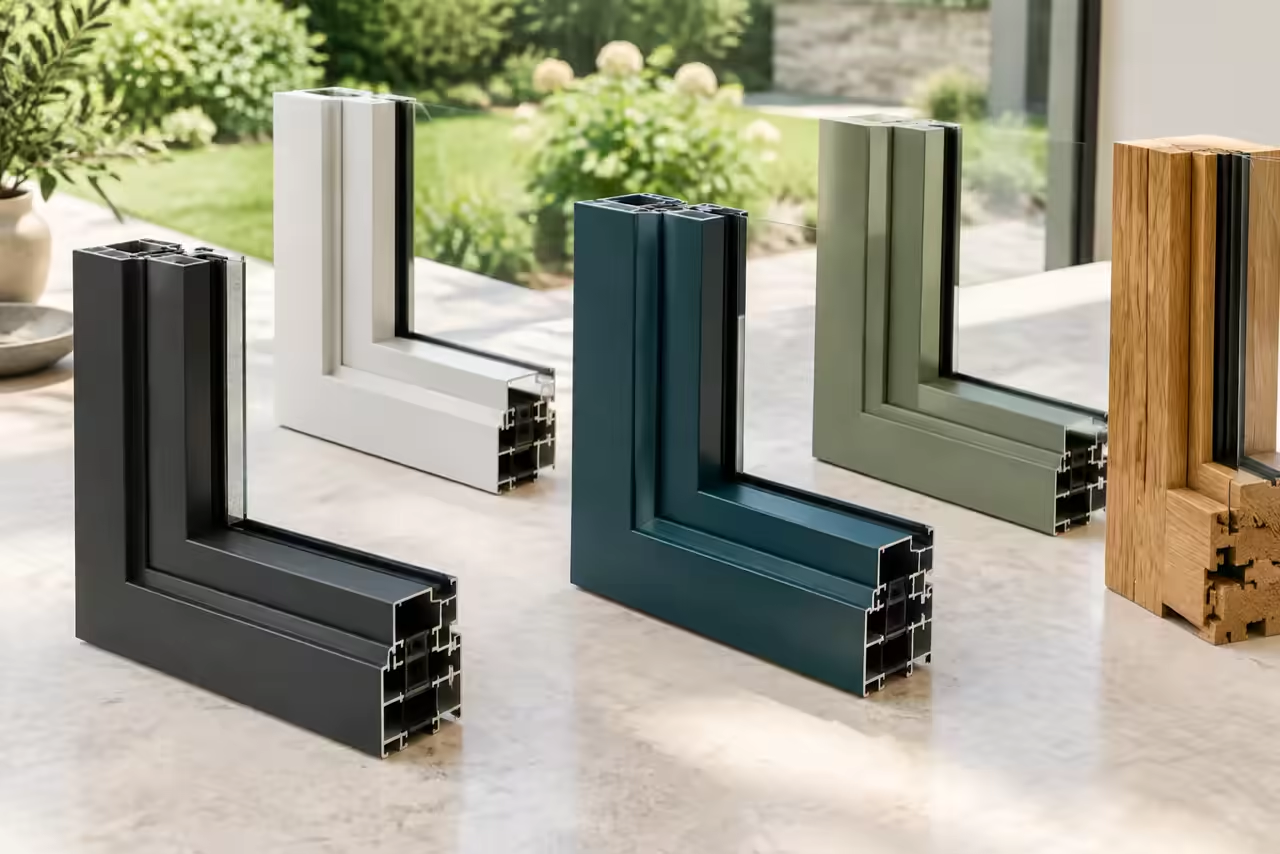
Specify each supplier’s reference and accepted sample. Some are smooth, others grained; powder coats can be smooth or textured. Compare opening edges, corner joints and trims too. Do not substitute a supposedly equivalent number for a proprietary name without seeing the products together.
foils
foil (woodgrain): A woodgrain foil is a decorative surface layer bonded to a profile, commonly used on uPVC windows and doors to imitate painted or stained timber. It describes the finish, not the frame material. Texture, colour, corner joints and matching trims all affect how convincing the result looks on a real building. More on foil (woodgrain)RAL
RAL: RAL is a colour reference system used to specify finishes, including many coated aluminium windows and doors. A reference identifies a colour target, not a guarantee that different materials or finishes will look identical. Surface texture, gloss, lighting and the coating process can alter how the chosen shade appears. More on RALfoil
foil (woodgrain): A woodgrain foil is a decorative surface layer bonded to a profile, commonly used on uPVC windows and doors to imitate painted or stained timber. It describes the finish, not the frame material. Texture, colour, corner joints and matching trims all affect how convincing the result looks on a real building. More on foil (woodgrain)Check the complete finish package
Read the colour and finish guidance
Side by side
| Compared | Aluminium colour coating | uPVC colour foil |
|---|---|---|
| Look and sightlines | A coated metal surface in a specified colour and sheen. | A decorative film on the profile; smooth or grained. |
| Maximum sizes | Depends on the product, not the colour — not applicable | Depends on the product, not the colour — not applicable |
| Thermal performance | Depends on the product, not the colour — not applicable | Depends on the product, not the colour — not applicable |
| Security standard | Depends on the product, not the colour — not applicable | Depends on the product, not the colour — not applicable |
| Ease of use | Aluminium colour coating does not change how the window or door operates; test the specified product in a showroom. | uPVC colour foilfoil (woodgrain): A woodgrain foil is a decorative surface layer bonded to a profile, commonly used on uPVC windows and doors to imitate painted or stained timber. It describes the finish, not the frame material. Texture, colour, corner joints and matching trims all affect how convincing the result looks on a real building. More on foil (woodgrain) |
| Maintenance | Follow the finish supplier care guide for Aluminium colour coating; inspect a sample in daylight for marks and cleaning behaviour. | Follow the finish supplier care guide for uPVC colour foilfoil (woodgrain): A woodgrain foil is a decorative surface layer bonded to a profile, commonly used on uPVC windows and doors to imitate painted or stained timber. It describes the finish, not the frame material. Texture, colour, corner joints and matching trims all affect how convincing the result looks on a real building. More on foil (woodgrain) |
| Expected lifespan | Depends on the product, not the colour — not applicable | Depends on the product, not the colour — not applicable |
| Typical price band | Depends on the product, not the colour — not applicable | Depends on the product, not the colour — not applicable |
| Best for | A coordinated metal-frame finish. | Colour within an available uPVC finish range. |
| Watch-outs | A RALRAL: RAL is a colour reference system used to specify finishes, including many coated aluminium windows and doors. A reference identifies a colour target, not a guarantee that different materials or finishes will look identical. Surface texture, gloss, lighting and the coating process can alter how the chosen shade appears. More on RALfoilfoil (woodgrain): A woodgrain foil is a decorative surface layer bonded to a profile, commonly used on uPVC windows and doors to imitate painted or stained timber. It describes the finish, not the frame material. Texture, colour, corner joints and matching trims all affect how convincing the result looks on a real building. More on foil (woodgrain) | Confirm film, core colour and the appearance of opened sashessash: A sash is the framed part of a window that holds the glass; it often describes the moving part. In a sliding sash window, glazed sashes move vertically. The word alone does not identify the material, balance mechanism or cleaning action, so ask what the complete window description actually means. More on sash |
Choose aluminium colour coating if…
- you want the confirmed coated metal finish and frame design
- the actual finish is available and suitable for the site
- the inside face, hardware and trims have been checked
Choose upvc colour foil if…
- the actual sample and uPVC construction suit the brief
foil
foil (woodgrain): A woodgrain foil is a decorative surface layer bonded to a profile, commonly used on uPVC windows and doors to imitate painted or stained timber. It describes the finish, not the frame material. Texture, colour, corner joints and matching trims all affect how convincing the result looks on a real building. More on foil (woodgrain) - the actual finish is available and suitable for the site
- the inside face, hardware and trims have been checked
Three real scenarios
Aluminium patio doors beside uPVC windows
Compare the door section and window corner side by side. A compatible contrast can work better than a near-match with visibly different sheen.
Replacing only the front elevation
Match the retained products where possible, using samples rather than screen pictures. Check whether the original finish is still available.
Smooth grey ordered with grained trims
Resolve the trim finish before manufacture. The same colour label does not hide a texture mismatch around each opening.
The team's verdict
Choose the finish and material that suit the product brief, then coordinate the visible samples. A deliberate complementary shade suits better when an exact cross-material match is unavailable. Neither finishing process is a universal winner.
Last reviewed:
Answered by the Windows & Doors Answered team. How we write answers · Corrections policy
Related
Ask a free question
Didn't find your answer? Ask the team. The team usually replies within one working day.