Guide
Choosing colours and finishes for windows and doors
Free guidance. No fees. No sales calls.
Short answer
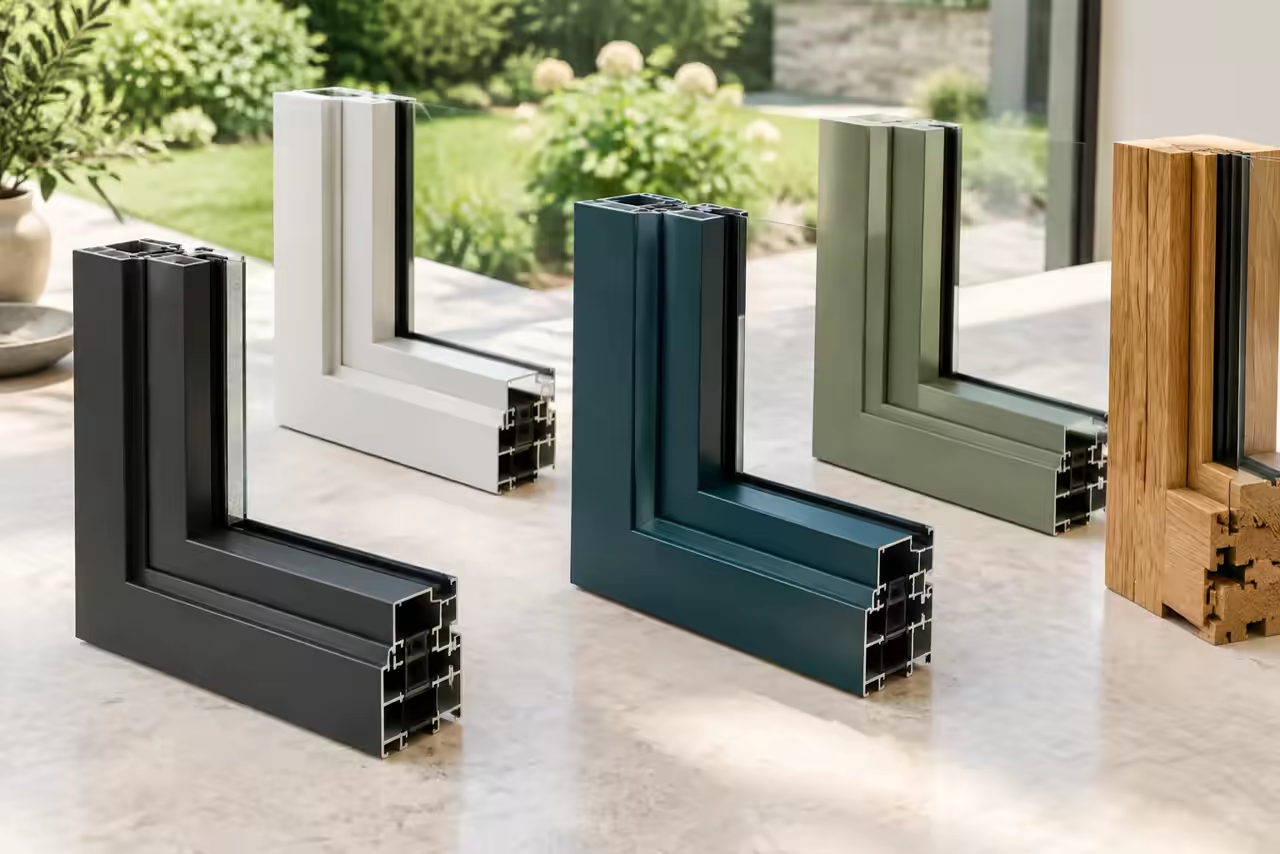
Choose colour and finish from physical samples against the actual building materials, not a screen alone. Consider the inside and outside separately, then check sheen, texture, availability and care requirements. Confirm the agreed finish across frames, doors, and hardware before ordering. A matching colour name does not guarantee identical appearance across materials or suppliers.
cills
cill: A cill is the lower projecting section beneath a window or door frame that helps shed rainwater away from the wall. It is also spelt sill. Its projection, joints and connection to the frame need to suit the wall construction, so water does not collect or run into vulnerable junctions. More on cillPlanning this? Get a free, no-obligation installer recommendation
Colour visualiser
See RAL 7016, 9001 and 9005 side by side on a stone houseA colour answer suggests what may suit one house; this guide takes the finish from shortlist to a repeatable order. Glass reflections, brick or stone, changing daylight and the finish texture all influence the result. The tool is a useful screening aid, but colours on screen are a guide only and cannot approve a factory finish.
RAL
RAL: RAL is a colour reference system used to specify finishes, including many coated aluminium windows and doors. A reference identifies a colour target, not a guarantee that different materials or finishes will look identical. Surface texture, gloss, lighting and the coating process can alter how the chosen shade appears. More on RAL1. Build a shortlist around the elevations
Photograph the house in different daylight and compare existing roof, mortar, cladding and neighbouring features. Decide whether the frames should contrast or sit quietly within the wall. Look from both the street and the room. Check planning or heritage requirements where relevant before committing to a finish that later needs changing at the order stage.
2. Compare physical samples together
Obtain samples showing the actual material, sheen and texture proposed, not just a printed colour chart. Put them against brick, stone or render outside and beside internal finishes. Compare , panels and hardware too. A smooth coating and a textured can look different under the same colour description, so retain the sample that represents the accepted finish.
cills
cill: A cill is the lower projecting section beneath a window or door frame that helps shed rainwater away from the wall. It is also spelt sill. Its projection, joints and connection to the frame need to suit the wall construction, so water does not collect or run into vulnerable junctions. More on cillfoil
foil (woodgrain): A woodgrain foil is a decorative surface layer bonded to a profile, commonly used on uPVC windows and doors to imitate painted or stained timber. It describes the finish, not the frame material. Texture, colour, corner joints and matching trims all affect how convincing the result looks on a real building. More on foil (woodgrain)Before moving on
- Physical samples are viewed at the property
- Internal and external choices are recorded separately
- Hardware and are checked alongside frames
cills
cill: A cill is the lower projecting section beneath a window or door frame that helps shed rainwater away from the wall. It is also spelt sill. Its projection, joints and connection to the frame need to suit the wall construction, so water does not collect or run into vulnerable junctions. More on cill
Print this page to use the checklist on the day.
3. Check finish suitability and availability
Ask the supplier about available inside-and-outside combinations, compatible hardware and the care regime for the exposure. On coastal sites, confirm the coating specification and conditions rather than assuming a dark colour provides protection. Ask whether non-standard colours affect cost, manufacture or later replacement matching. Ask your supplier for the factory lead time and written finish warranty for the ordered colour.
4. Record an unambiguous finish schedule
List colour reference, supplier finish name, texture, sheen and internal or external face against every item. Include , vents, trims, handles and infill panels. Note the approved physical sample and any acceptable variation between materials. At survey and delivery, compare the schedule with the order so a similar description is not silently substituted for the agreed specification.
cills
cill: A cill is the lower projecting section beneath a window or door frame that helps shed rainwater away from the wall. It is also spelt sill. Its projection, joints and connection to the frame need to suit the wall construction, so water does not collect or run into vulnerable junctions. More on cillYour project checklist
- Check the elevation in changing daylight
- Confirm sheen and texture
- Retain the approved sample
- Verify exposure-related care
- Ask about replacement matching
- Include every accessory in the schedule
Print this page to use the checklist on the day.
What to do next
Use the tool to narrow the palette, then ask your supplier what they can show you of the actual finishes. Agree a written schedule covering frames and accessories, with the exact colour references, material, texture and sheen. Our team does not provide or arrange colour samples.
RAL
RAL: RAL is a colour reference system used to specify finishes, including many coated aluminium windows and doors. A reference identifies a colour target, not a guarantee that different materials or finishes will look identical. Surface texture, gloss, lighting and the coating process can alter how the chosen shade appears. More on RALRelevant answers and comparisons
Useful tools
Questions people also ask
Does the same RAL reference always look identical?
Not necessarily. Substrate, texture, sheen and production variation can affect appearance. Compare the actual supplied finishes and retain an approved sample.
Can I choose different colours inside and outside?
Many products offer it, but availability, hardware and lead time vary. Confirm the exact combination before accepting the quote.
Will an unusual colour delay the order?
It may. Ask for the finish-specific programme and when it is confirmed, rather than relying on the standard-colour delivery estimate.
Last reviewed:
Answered by the Windows & Doors Answered team. How we write answers · Corrections policy
Related
Ask a free question
Didn't find your answer? Ask the team. The team usually replies within one working day.