Comparison
Powder-coated aluminium vs foiled uPVC: which coloured finish holds up better?
Short answer
Choose aluminium for crisp, uniform matt or textured colour with clean mitred corners and minimal thermal expansion on dark shades. Choose foiled uPVC when you want realistic timber-grain texture or warm heritage tones at a lower price point, checking that the profile uses flush or discreetly finished corner welds.
powder-coated
powder coating: Powder coating is a finish made by applying coating powder to a prepared metal surface and curing it to form a protective coloured layer. The quality of preparation and the specified coating system matter. A colour name alone does not establish suitability for coastal exposure, strong sunlight or a particular maintenance routine. More on powder coatingPlanning this? Get a free, no-obligation installer recommendation
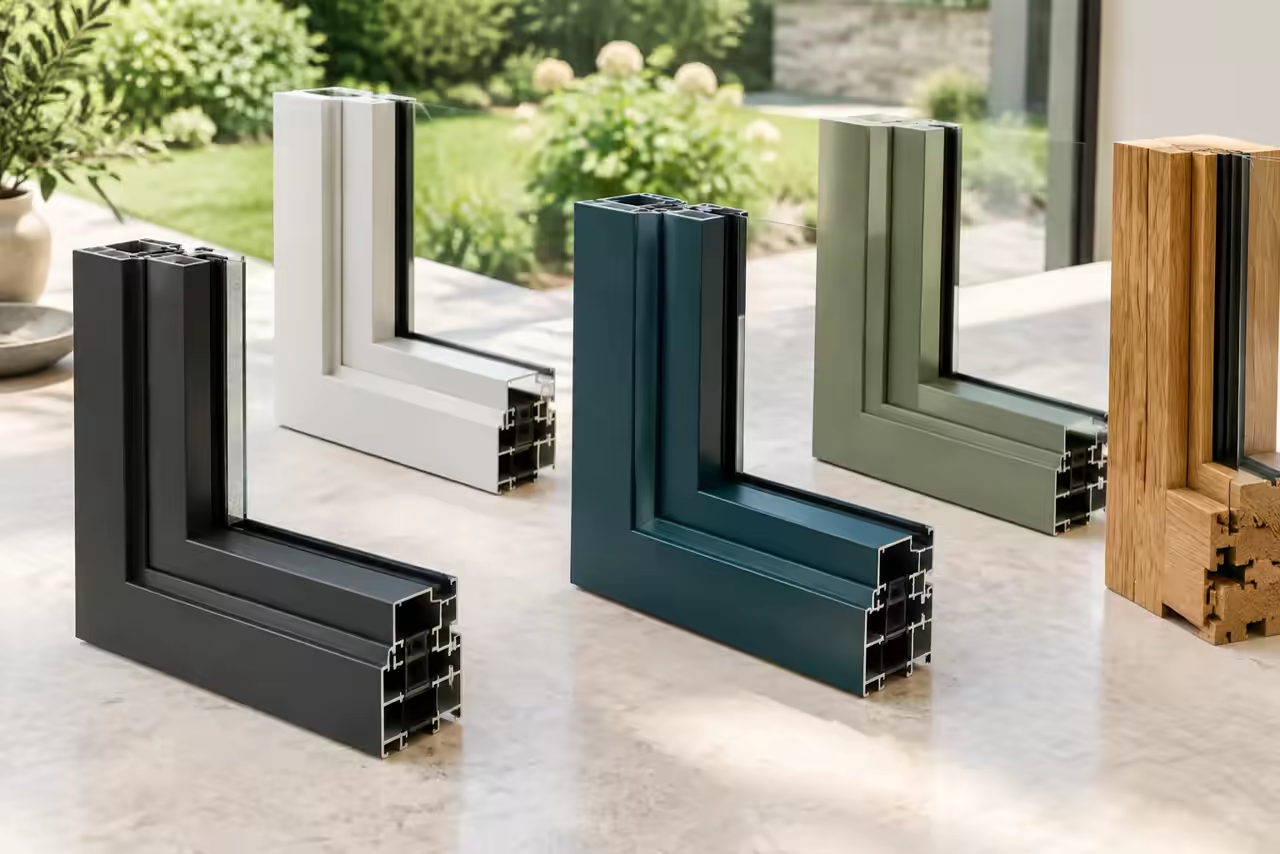
Surface texture and corner detail
Powder-coated
powder coating: Powder coating is a finish made by applying coating powder to a prepared metal surface and curing it to form a protective coloured layer. The quality of preparation and the specified coating system matter. A colour name alone does not establish suitability for coastal exposure, strong sunlight or a particular maintenance routine. More on powder coatingwoodgrain
foil (woodgrain): A woodgrain foil is a decorative surface layer bonded to a profile, commonly used on uPVC windows and doors to imitate painted or stained timber. It describes the finish, not the frame material. Texture, colour, corner joints and matching trims all affect how convincing the result looks on a real building. More on foil (woodgrain)Sun exposure and dark colours
Dark on south-facing uPVC absorb more heat and rely on steel reinforcement and correct expansion gaps to stay straight in summer. aluminium handles high solar temperatures with far less linear movement, especially across wide door .
foils
foil (woodgrain): A woodgrain foil is a decorative surface layer bonded to a profile, commonly used on uPVC windows and doors to imitate painted or stained timber. It describes the finish, not the frame material. Texture, colour, corner joints and matching trims all affect how convincing the result looks on a real building. More on foil (woodgrain)Powder-coated
powder coating: Powder coating is a finish made by applying coating powder to a prepared metal surface and curing it to form a protective coloured layer. The quality of preparation and the specified coating system matter. A colour name alone does not establish suitability for coastal exposure, strong sunlight or a particular maintenance routine. More on powder coatingsashes
sash: A sash is the framed part of a window that holds the glass; it often describes the moving part. In a sliding sash window, glazed sashes move vertically. The word alone does not identify the material, balance mechanism or cleaning action, so ask what the complete window description actually means. More on sashCleaning and long-term repairability
Both finishes need only mild soapy water rather than abrasive cream cleaners or solvents. Small scratches on aluminium can be touched in with matching touch-up paint, while damaged uPVC usually needs a specialist cosmetic repair kit.
powder-coated
powder coating: Powder coating is a finish made by applying coating powder to a prepared metal surface and curing it to form a protective coloured layer. The quality of preparation and the specified coating system matter. A colour name alone does not establish suitability for coastal exposure, strong sunlight or a particular maintenance routine. More on powder coatingRAL
RAL: RAL is a colour reference system used to specify finishes, including many coated aluminium windows and doors. A reference identifies a colour target, not a guarantee that different materials or finishes will look identical. Surface texture, gloss, lighting and the coating process can alter how the chosen shade appears. More on RALfoil
foil (woodgrain): A woodgrain foil is a decorative surface layer bonded to a profile, commonly used on uPVC windows and doors to imitate painted or stained timber. It describes the finish, not the frame material. Texture, colour, corner joints and matching trims all affect how convincing the result looks on a real building. More on foil (woodgrain)Related pages on this topic
Side by side
| Compared | Powder-coated aluminium | Foiled uPVC |
|---|---|---|
| Look and sightlines | Coated colour finish; texture and sheen depend on the specified process. | A bonded decorative film with a woodgrainfoil (woodgrain): A woodgrain foil is a decorative surface layer bonded to a profile, commonly used on uPVC windows and doors to imitate painted or stained timber. It describes the finish, not the frame material. Texture, colour, corner joints and matching trims all affect how convincing the result looks on a real building. More on foil (woodgrain) |
| Maximum sizes | Depends on the product, not the colour — not applicable | Depends on the product, not the colour — not applicable |
| Thermal performance | Depends on the product, not the colour — not applicable | Depends on the product, not the colour — not applicable |
| Security standard | Depends on the product, not the colour — not applicable | Depends on the product, not the colour — not applicable |
| Ease of use | Opening action comes from the window or door, not its finish. | Opening action comes from the window or door, not its finish. |
| Maintenance | Wash salt deposits off using the maker's coastal care instructions; attend to coating damage. | Use compatible gentle cleaners; inspect foilfoil (woodgrain): A woodgrain foil is a decorative surface layer bonded to a profile, commonly used on uPVC windows and doors to imitate painted or stained timber. It describes the finish, not the frame material. Texture, colour, corner joints and matching trims all affect how convincing the result looks on a real building. More on foil (woodgrain) |
| Expected lifespan | Depends on the product, not the colour — not applicable | Depends on the product, not the colour — not applicable |
| Typical price band | Depends on the product, not the colour — not applicable | Depends on the product, not the colour — not applicable |
| Best for | Coastal projects needing a colour where the proposed pretreatment and coating are supported for the site. | A timber-style coastal replacement where the actual foilfoil (woodgrain): A woodgrain foil is a decorative surface layer bonded to a profile, commonly used on uPVC windows and doors to imitate painted or stained timber. It describes the finish, not the frame material. Texture, colour, corner joints and matching trims all affect how convincing the result looks on a real building. More on foil (woodgrain) |
| Watch-outs | Colour name alone does not establish coastal suitability or warranty cover. | Hardware and reinforcement still need checking even though the visible frame is not aluminium. |
Choose powder-coated aluminium if…
- Crisp modern matt or fine-textured black, anthracite or stone grey without plastic sheen.
- Wide south-facing patio doors and large panes where low thermal expansion matters.
- Seamless mechanical corners free from plastic weld grooves.
Choose foiled upvc if…
- texture mimicking painted timber at a friendlier budget than hardwood.
Woodgrain
foil (woodgrain): A woodgrain foil is a decorative surface layer bonded to a profile, commonly used on uPVC windows and doors to imitate painted or stained timber. It describes the finish, not the frame material. Texture, colour, corner joints and matching trims all affect how convincing the result looks on a real building. More on foil (woodgrain) - Matching heritage cream, sage or Chartwell green on traditional .
casements
casement: A casement is a hinged window opening, usually attached at the side or top of its frame. It opens rather than sliding vertically like a traditional sliding sash. The hinge position and opening direction affect ventilation, cleaning, clear passage and conflicts with paths, taps, curtains or furniture. More on casement - Warm-to-the-touch interior frames with lower upfront supply-and-fit cost.
Three real scenarios
Anthracite grey rear extension
Powder-coated
powder coating: Powder coating is a finish made by applying coating powder to a prepared metal surface and curing it to form a protective coloured layer. The quality of preparation and the specified coating system matter. A colour name alone does not establish suitability for coastal exposure, strong sunlight or a particular maintenance routine. More on powder coatingsightlines
sightline: A sightline is the visible width of frame you see when you look at a window or door. Slimmer sightlines mean more glass and less frame. Makers sometimes measure it differently, so compare drawings of the exact products, especially where fixed and opening panes sit side by side. More on sightlineCream woodgrain cottage windows
Mechanically jointed foiled uPVC offers a convincing painted-timber appearance well below hardwood cost.
Whole-house coloured window upgrade on a budget
Smooth or grained foiled uPVC keeps total spend lower while lifting kerb appeal over plain white plastic.
The team's verdict
Powder-coated
powder coating: Powder coating is a finish made by applying coating powder to a prepared metal surface and curing it to form a protective coloured layer. The quality of preparation and the specified coating system matter. A colour name alone does not establish suitability for coastal exposure, strong sunlight or a particular maintenance routine. More on powder coatingwoodgrain
foil (woodgrain): A woodgrain foil is a decorative surface layer bonded to a profile, commonly used on uPVC windows and doors to imitate painted or stained timber. It describes the finish, not the frame material. Texture, colour, corner joints and matching trims all affect how convincing the result looks on a real building. More on foil (woodgrain)Questions people also ask
Does foiled uPVC peel over time?
Modern exterior-grade acrylic bonded under factory heat rarely peel when properly manufactured; check the profile maker's written warranty.
foils
foil (woodgrain): A woodgrain foil is a decorative surface layer bonded to a profile, commonly used on uPVC windows and doors to imitate painted or stained timber. It describes the finish, not the frame material. Texture, colour, corner joints and matching trims all affect how convincing the result looks on a real building. More on foil (woodgrain)foil
foil (woodgrain): A woodgrain foil is a decorative surface layer bonded to a profile, commonly used on uPVC windows and doors to imitate painted or stained timber. It describes the finish, not the frame material. Texture, colour, corner joints and matching trims all affect how convincing the result looks on a real building. More on foil (woodgrain)Do powder-coated aluminium and foiled uPVC match the exact same RAL shade?
Not identically—gloss level, grain texture and substrate change how light reflects, so view physical samples side by side outdoors.
Is dark foiled uPVC safe on south-facing elevations?
Yes when steel-reinforced and installed with proper expansion tolerances, though wide dark doors are generally more stable in aluminium.
Are coloured frames coloured inside as well?
Both aluminium and foiled uPVC are widely available —coloured outside with clean white or cream inside.
dual-colour
dual colour: Dual colour means that a window or door has different finishes on its outside and inside faces. It may be achieved through coatings, foils or separate components, depending on the material and system. Check what is visible at edges and when the sash or door is open, not only when closed. More on dual colourLast reviewed:
Answered by the Windows & Doors Answered team. How we write answers · Corrections policy
Related
Ask a free question
Didn't find your answer? Ask the team. The team usually replies within one working day.