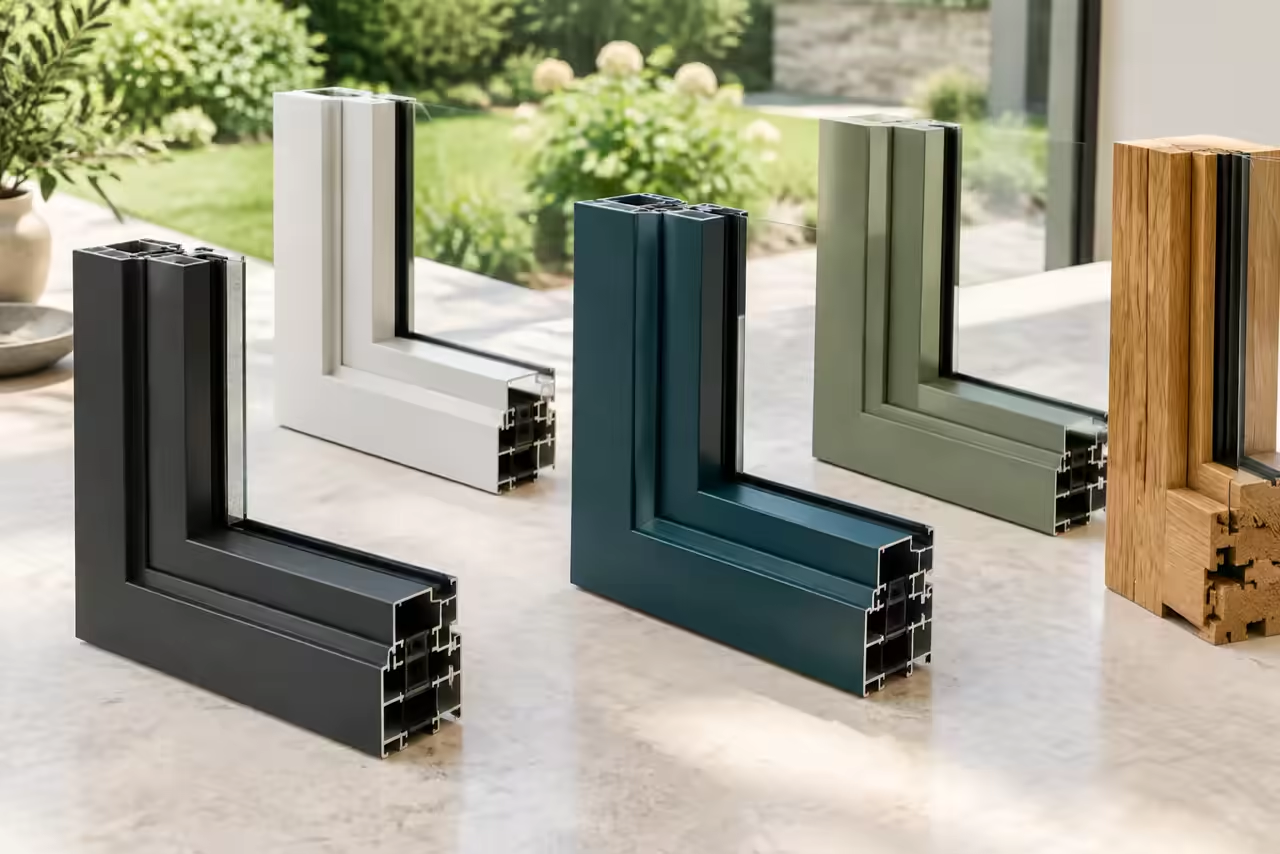
Comparison
Powder-coated vs anodised aluminium windows: which finish lasts better?
Short answer
Choose architectural for the widest colour palette, consistent matt or textured tones and easier minor touch-up on residential homes. Choose architectural when you want a genuine metallic bronze, silver or champagne finish bonded electrochemically into the aluminium surface, especially on contemporary or marine-adjacent designs.
powder coating
powder coating: Powder coating is a finish made by applying coating powder to a prepared metal surface and curing it to form a protective coloured layer. The quality of preparation and the specified coating system matter. A colour name alone does not establish suitability for coastal exposure, strong sunlight or a particular maintenance routine. More on powder coatingRAL
RAL: RAL is a colour reference system used to specify finishes, including many coated aluminium windows and doors. A reference identifies a colour target, not a guarantee that different materials or finishes will look identical. Surface texture, gloss, lighting and the coating process can alter how the chosen shade appears. More on RALanodising
anodising: Anodising is an electrochemical process that develops a protective oxide layer on aluminium. It gives a different surface character from a painted coating, and the appearance can vary with alloy and processing. Suitability, colour consistency and care should be agreed for the exact product and exposure rather than assumed from the process name. More on anodisingPlanning this? Get a free, no-obligation installer recommendation
How each finish bonds to aluminium
Powder coating
powder coating: Powder coating is a finish made by applying coating powder to a prepared metal surface and curing it to form a protective coloured layer. The quality of preparation and the specified coating system matter. A colour name alone does not establish suitability for coastal exposure, strong sunlight or a particular maintenance routine. More on powder coatingAnodising
anodising: Anodising is an electrochemical process that develops a protective oxide layer on aluminium. It gives a different surface character from a painted coating, and the appearance can vary with alloy and processing. Suitability, colour consistency and care should be agreed for the exact product and exposure rather than assumed from the process name. More on anodisingColour choice, batch matching and coastal specs
Powder coating
powder coating: Powder coating is a finish made by applying coating powder to a prepared metal surface and curing it to form a protective coloured layer. The quality of preparation and the specified coating system matter. A colour name alone does not establish suitability for coastal exposure, strong sunlight or a particular maintenance routine. More on powder coatingRAL
RAL: RAL is a colour reference system used to specify finishes, including many coated aluminium windows and doors. A reference identifies a colour target, not a guarantee that different materials or finishes will look identical. Surface texture, gloss, lighting and the coating process can alter how the chosen shade appears. More on RALdual-colour
dual colour: Dual colour means that a window or door has different finishes on its outside and inside faces. It may be achieved through coatings, foils or separate components, depending on the material and system. Check what is visible at edges and when the sash or door is open, not only when closed. More on dual colourAnodising
anodising: Anodising is an electrochemical process that develops a protective oxide layer on aluminium. It gives a different surface character from a painted coating, and the appearance can vary with alloy and processing. Suitability, colour consistency and care should be agreed for the exact product and exposure rather than assumed from the process name. More on anodisinganodised
anodising: Anodising is an electrochemical process that develops a protective oxide layer on aluminium. It gives a different surface character from a painted coating, and the appearance can vary with alloy and processing. Suitability, colour consistency and care should be agreed for the exact product and exposure rather than assumed from the process name. More on anodisingScratches, mortar splashes and upkeep
Alkaline plaster, cement and brick acid etch finishes irreversibly during building work, so site taping is non-negotiable. tolerates careful touch-up paint on small knocks, whereas deep scratches on aluminium are much harder to disguise seamlessly.
anodised
anodising: Anodising is an electrochemical process that develops a protective oxide layer on aluminium. It gives a different surface character from a painted coating, and the appearance can vary with alloy and processing. Suitability, colour consistency and care should be agreed for the exact product and exposure rather than assumed from the process name. More on anodisingPowder coating
powder coating: Powder coating is a finish made by applying coating powder to a prepared metal surface and curing it to form a protective coloured layer. The quality of preparation and the specified coating system matter. A colour name alone does not establish suitability for coastal exposure, strong sunlight or a particular maintenance routine. More on powder coatinganodised
anodising: Anodising is an electrochemical process that develops a protective oxide layer on aluminium. It gives a different surface character from a painted coating, and the appearance can vary with alloy and processing. Suitability, colour consistency and care should be agreed for the exact product and exposure rather than assumed from the process name. More on anodisingRelated pages on this topic
Side by side
| Compared | Powder-coated aluminium | Anodised aluminium |
|---|---|---|
| Look and sightlines | Coated colour finish; texture and sheen depend on the specified process. | Metallic finish formed on the aluminium surface; adjacent batches can differ in appearance. |
| Maximum sizes | Depends on the product, not the colour — not applicable | Depends on the product, not the colour — not applicable |
| Thermal performance | Depends on the product, not the colour — not applicable | Depends on the product, not the colour — not applicable |
| Security standard | Depends on the product, not the colour — not applicable | Depends on the product, not the colour — not applicable |
| Ease of use | Opening action comes from the window or door, not its finish. | Opening action comes from the window or door, not its finish. |
| Maintenance | Wash salt deposits off using the maker's coastal care instructions; attend to coating damage. | Follow the anodiser's cleaning instructions and check exposed edges and fixings. |
| Expected lifespan | Depends on the product, not the colour — not applicable | Depends on the product, not the colour — not applicable |
| Typical price band | Depends on the product, not the colour — not applicable | Depends on the product, not the colour — not applicable |
| Best for | Coastal projects needing a colour where the proposed pretreatment and coating are supported for the site. | Projects seeking a metallic face with a process specified for the exposure. |
| Watch-outs | Colour name alone does not establish coastal suitability or warranty cover. | Do not infer salt resistance from the word anodisedanodising: Anodising is an electrochemical process that develops a protective oxide layer on aluminium. It gives a different surface character from a painted coating, and the appearance can vary with alloy and processing. Suitability, colour consistency and care should be agreed for the exact product and exposure rather than assumed from the process name. More on anodising |
Choose powder-coated aluminium if…
- Exact colour matching across windows, bifold doors, fascias and guttering.
RAL
RAL: RAL is a colour reference system used to specify finishes, including many coated aluminium windows and doors. A reference identifies a colour target, not a guarantee that different materials or finishes will look identical. Surface texture, gloss, lighting and the coating process can alter how the chosen shade appears. More on RAL - frames (for example dark grey outside, white inside).
Dual-colour
dual colour: Dual colour means that a window or door has different finishes on its outside and inside faces. It may be achieved through coatings, foils or separate components, depending on the material and system. Check what is visible at edges and when the sash or door is open, not only when closed. More on dual colour - Easy future colour touch-ups or recoating if a frame gets scratched.
Choose anodised aluminium if…
- True metallic lustre in natural silver, bronze or champagne that cannot peel or flake.
- High-end architectural extensions wanting subtle tonal sheen rather than painted texture.
- Exposed environments where thick architectural resists filiform corrosion.
anodising
anodising: Anodising is an electrochemical process that develops a protective oxide layer on aluminium. It gives a different surface character from a painted coating, and the appearance can vary with alloy and processing. Suitability, colour consistency and care should be agreed for the exact product and exposure rather than assumed from the process name. More on anodising
Three real scenarios
Coastal contemporary self-build
Either marine-grade or Qualicoat Seaside performs well—protect frames thoroughly from mortar during masonry work.
anodising
anodising: Anodising is an electrochemical process that develops a protective oxide layer on aluminium. It gives a different surface character from a painted coating, and the appearance can vary with alloy and processing. Suitability, colour consistency and care should be agreed for the exact product and exposure rather than assumed from the process name. More on anodisingpowder coat
powder coating: Powder coating is a finish made by applying coating powder to a prepared metal surface and curing it to form a protective coloured layer. The quality of preparation and the specified coating system matter. A colour name alone does not establish suitability for coastal exposure, strong sunlight or a particular maintenance routine. More on powder coatingRear extension matching existing grey doors
Powder coating
powder coating: Powder coating is a finish made by applying coating powder to a prepared metal surface and curing it to form a protective coloured layer. The quality of preparation and the specified coating system matter. A colour name alone does not establish suitability for coastal exposure, strong sunlight or a particular maintenance routine. More on powder coatingRAL
RAL: RAL is a colour reference system used to specify finishes, including many coated aluminium windows and doors. A reference identifies a colour target, not a guarantee that different materials or finishes will look identical. Surface texture, gloss, lighting and the coating process can alter how the chosen shade appears. More on RALArchitect-led bronze glazing package
Architectural bronze delivers metallic depth that painted bronze finishes only approximate.
anodising
anodising: Anodising is an electrochemical process that develops a protective oxide layer on aluminium. It gives a different surface character from a painted coating, and the appearance can vary with alloy and processing. Suitability, colour consistency and care should be agreed for the exact product and exposure rather than assumed from the process name. More on anodisingThe team's verdict
Powder coating
powder coating: Powder coating is a finish made by applying coating powder to a prepared metal surface and curing it to form a protective coloured layer. The quality of preparation and the specified coating system matter. A colour name alone does not establish suitability for coastal exposure, strong sunlight or a particular maintenance routine. More on powder coatinganodising
anodising: Anodising is an electrochemical process that develops a protective oxide layer on aluminium. It gives a different surface character from a painted coating, and the appearance can vary with alloy and processing. Suitability, colour consistency and care should be agreed for the exact product and exposure rather than assumed from the process name. More on anodisingQuestions people also ask
Is anodised aluminium better than powder coating near the sea?
High-micron architectural resists peeling in salt air, while Qualicoat Seaside also carries coastal warranties—regular fresh-water washing helps both.
anodising
anodising: Anodising is an electrochemical process that develops a protective oxide layer on aluminium. It gives a different surface character from a painted coating, and the appearance can vary with alloy and processing. Suitability, colour consistency and care should be agreed for the exact product and exposure rather than assumed from the process name. More on anodisingpowder coating
powder coating: Powder coating is a finish made by applying coating powder to a prepared metal surface and curing it to form a protective coloured layer. The quality of preparation and the specified coating system matter. A colour name alone does not establish suitability for coastal exposure, strong sunlight or a particular maintenance routine. More on powder coatingCan anodised aluminium windows be dual-colour?
Dual-colour
dual colour: Dual colour means that a window or door has different finishes on its outside and inside faces. It may be achieved through coatings, foils or separate components, depending on the material and system. Check what is visible at edges and when the sash or door is open, not only when closed. More on dual colouranodising
anodising: Anodising is an electrochemical process that develops a protective oxide layer on aluminium. It gives a different surface character from a painted coating, and the appearance can vary with alloy and processing. Suitability, colour consistency and care should be agreed for the exact product and exposure rather than assumed from the process name. More on anodisingpowder coating
powder coating: Powder coating is a finish made by applying coating powder to a prepared metal surface and curing it to form a protective coloured layer. The quality of preparation and the specified coating system matter. A colour name alone does not establish suitability for coastal exposure, strong sunlight or a particular maintenance routine. More on powder coatingDoes powder coating fade in direct sunlight?
Architectural Class 1 and Class 2 polyester powders resist UV fade well, with super-durable powders retaining gloss longest on dark south-facing walls.
Why did builders damage my anodised frames?
Wet cement, lime mortar and brick cleaner chemically attack the oxide layer; protective film must stay in place until wet trades finish.
Last reviewed:
Answered by the Windows & Doors Answered team. How we write answers · Corrections policy
Related
Ask a free question
Didn't find your answer? Ask the team. The team usually replies within one working day.