Comparison
uPVC vs aluminium sliding patio doors: sightlines, strength and price
Short answer
uPVC sliding patio doors are the budget-friendly choice for standard 2 m to 3 m openings where thicker frames and white or foiled finishes suit the house. aluminium sliding doors cost more, yet their superior rigidity enables much wider glass panes, slimmer interlocks and crisp dark colours without thermal bow.
Thermally broken
thermal break: A thermal break is a less conductive connection separating the inner and outer parts of a metal frame to reduce heat flow through it. It helps improve frame performance but does not determine the whole window result alone. Glass, spacers, geometry and the installation junction all remain part of the assessment. More on thermal breakpowder-coated
powder coating: Powder coating is a finish made by applying coating powder to a prepared metal surface and curing it to form a protective coloured layer. The quality of preparation and the specified coating system matter. A colour name alone does not establish suitability for coastal exposure, strong sunlight or a particular maintenance routine. More on powder coatingPlanning this? Get a free, no-obligation installer recommendation
Frame strength and central interlock width
Steel-reinforced uPVC requires chunkier stiles to carry large double-glazed units, creating a wide vertical band where the two doors overlap. Extruded aluminium is inherently stiffer, allowing dramatically slimmer meeting stiles and taller panes that maximise garden views.
sash
sash: A sash is the framed part of a window that holds the glass; it often describes the moving part. In a sliding sash window, glazed sashes move vertically. The word alone does not identify the material, balance mechanism or cleaning action, so ask what the complete window description actually means. More on sashThermal movement in dark colours
Dark-foiled uPVC expands more than aluminium in strong summer sunshine, which can make very wide dark uPVC sliders feel tight on their tracks if not carefully reinforced and adjusted. aluminium handles dark shades across wide spans far more reliably.
Powder-coated
powder coating: Powder coating is a finish made by applying coating powder to a prepared metal surface and curing it to form a protective coloured layer. The quality of preparation and the specified coating system matter. A colour name alone does not establish suitability for coastal exposure, strong sunlight or a particular maintenance routine. More on powder coatingBudget and thermal performance
Multi-chamber uPVC patio doors deliver strong insulation at a lower entry price. Modern aluminium sliders meet current Part L replacement standards comfortably, so compare whole-door Ud values and roller-track warranties side by side.
thermally broken
thermal break: A thermal break is a less conductive connection separating the inner and outer parts of a metal frame to reduce heat flow through it. It helps improve frame performance but does not determine the whole window result alone. Glass, spacers, geometry and the installation junction all remain part of the assessment. More on thermal breakSide by side
| Compared | uPVC doors | Aluminium doors |
|---|---|---|
| Look and sightlines | Wider frames than aluminium; timber-look foilsfoil (woodgrain): A woodgrain foil is a decorative surface layer bonded to a profile, commonly used on uPVC windows and doors to imitate painted or stained timber. It describes the finish, not the frame material. Texture, colour, corner joints and matching trims all affect how convincing the result looks on a real building. More on foil (woodgrain) | Slim frames and large glass; crisp modern lines in almost any colour. |
| Maximum sizes | Maximum widths and heights for uPVC doors depend on wind load and glass weight — confirm against the maker's size chart. | Maximum widths and heights for Aluminium doors depend on wind load and glass weight — confirm against the maker's size chart. |
| Thermal performance | Must meet building regulations. England, replacement doors over 60% glazed: maximum 1.4 W/m²K or DSERDSER: DSER means Door Set Energy Rating. It assesses an external door set as a complete assembly rather than judging the door glass on its own. The rating takes account of energy performance, including heat loss and air leakage. Ask whether the label covers the exact leaf, frame and glazing proposed. More on DSERU-valueU-value: A U-value describes how readily heat passes through a building element. A lower value means less heat loss through that element. For windows and doors, distinguish the complete assembly from the glass alone: a good glass figure does not establish the performance of the frame, edges and finished product. More on U-value | Must meet building regulations. England, replacement doors over 60% glazed: maximum 1.4 W/m²K or DSERDSER: DSER means Door Set Energy Rating. It assesses an external door set as a complete assembly rather than judging the door glass on its own. The rating takes account of energy performance, including heat loss and air leakage. Ask whether the label covers the exact leaf, frame and glazing proposed. More on DSERU-valueU-value: A U-value describes how readily heat passes through a building element. A lower value means less heat loss through that element. For windows and doors, distinguish the complete assembly from the glass alone: a good glass figure does not establish the performance of the frame, edges and finished product. More on U-value |
| Security standard | Look for PAS 24PAS 24: PAS 24 is a security test specification for complete windows and external door sets. It examines resistance to defined attack methods rather than promising that a product cannot be broken into. Evidence should relate to the actual system, configuration and hardware, not merely a lock or a broad product range. More on PAS 24 | Look for PAS 24PAS 24: PAS 24 is a security test specification for complete windows and external door sets. It examines resistance to defined attack methods rather than promising that a product cannot be broken into. Evidence should relate to the actual system, configuration and hardware, not merely a lock or a broad product range. More on PAS 24 |
| Ease of use | Fine on smaller doors; large uPVC doors can drop or need adjusting. | Smooth and stiff; frames stay true over time. |
| Maintenance | Wipe clean; hinges may need adjusting over the years. | An occasional wash and a check of hinges and locks. |
| Expected lifespan | Service life for uPVC doors depends on exposure, specification and care — ask for the written frame, finish and hardware warranties. | Service life for Aluminium doors depends on exposure, specification and care — ask for the written frame, finish and hardware warranties. |
| Typical price band | Standard uPVC external doors: £400 to £1,000+ (Checkatrade door installation guide, last updated Feb 2026; checked 25 Nov 2026) (typical published UK range, supplied and fitted). | Installed cost for Aluminium doors varies with size, glazing and site access — compare two or three itemised written quotes. |
| Best for | Standard-sized back and side doors on a budget. | Wide glazed openings, modern homes and strong or dual colours. |
| Watch-outs | Large panes and wide openings push uPVC towards its limits. | Cheaper systems have bulkier frames and basic hardware. |
Figures from published manufacturer data, building regulations and UK cost guides. Your price will depend on your project.
Prices are published guide figures from the sources listed, not our own quotes. Installed prices vary by UK region, access, glazing specification and making good.
- Pilkington UK — Part L England existing dwellings guidance (Part L 2021 (in force June 2022)) — checked
- REHAU — Part L existing dwellings fact sheet (PDF) (2022 edition) — checked
- British Woodworking Federation — Part L new dwellings summary (2022 Part L update) — checked
- Pilkington UK — Scottish Building Standards Section 6 domestic guidance (2022/2023 Scottish Technical Handbook) — checked
- Checkatrade — Door installation costs guide (last updated Feb 2026) — checked
Choose upvc doors if…
- Replacing an older patio slider on a modest budget where opening width stays compact.
- Homes already fitted with matching uPVC where ultra-slim interlocks aren't essential.
casements
casement: A casement is a hinged window opening, usually attached at the side or top of its frame. It opens rather than sliding vertically like a traditional sliding sash. The hinge position and opening direction affect ventilation, cleaning, clear passage and conflicts with paths, taps, curtains or furniture. More on casement - Standard two-panel layouts in white or light-coloured .
foils
foil (woodgrain): A woodgrain foil is a decorative surface layer bonded to a profile, commonly used on uPVC windows and doors to imitate painted or stained timber. It describes the finish, not the frame material. Texture, colour, corner joints and matching trims all affect how convincing the result looks on a real building. More on foil (woodgrain)
Choose aluminium doors if…
- Wide extensions (3 m+) wanting expansive glass panes and narrow central interlocks.
- Dark anthracite or jet-black frames facing south or west sunlight.
- Heavy-duty operation for smooth gliding year after year.
lift-and-slide
lift-and-slide: Lift-and-slide describes a sliding door mechanism in which the handle lifts the moving leaf from its sealing position for travel, then lowers it back when closing. It can help with heavier leaves, but operating effort still depends on the complete system, adjustment, handle and installation rather than the mechanism name alone. More on lift-and-slide
Three real scenarios
2.4 m rear patio swap in a suburban semi
A reinforced uPVC slider replaces the old door cleanly at the lowest installed cost.
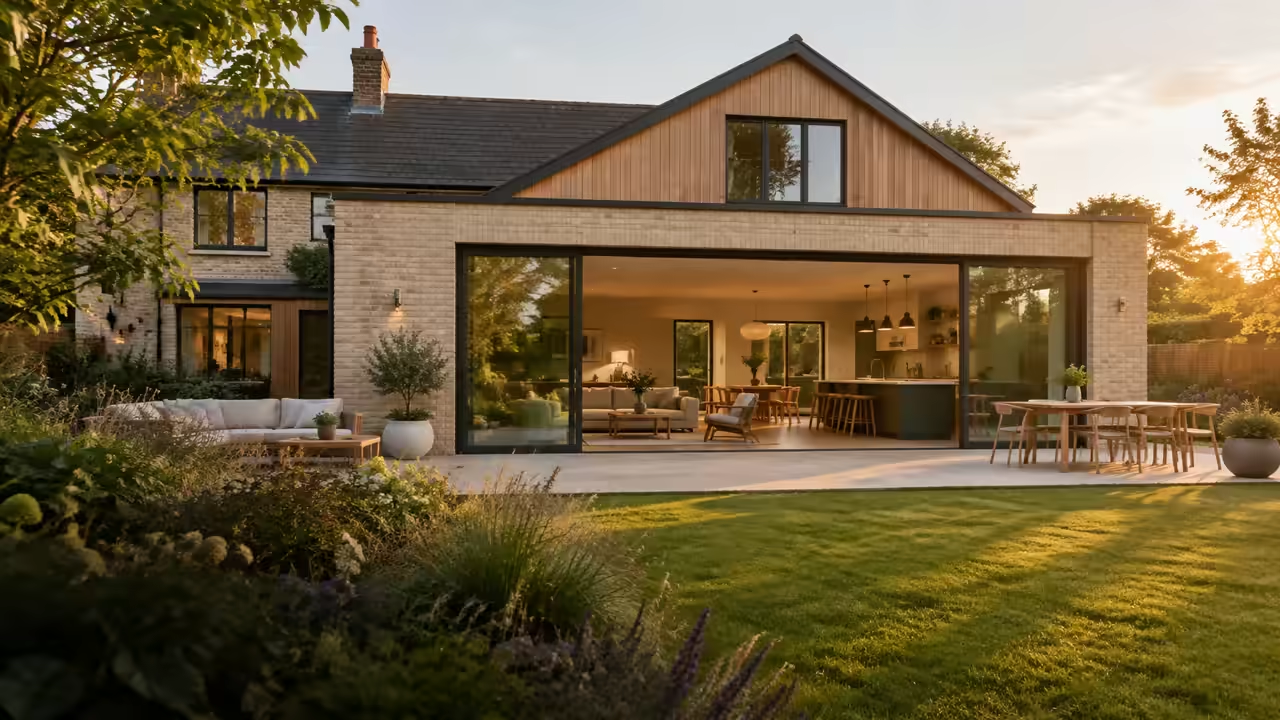
4.2 m open-plan kitchen extension
Thermally broken
thermal break: A thermal break is a less conductive connection separating the inner and outer parts of a metal frame to reduce heat flow through it. It helps improve frame performance but does not determine the whole window result alone. Glass, spacers, geometry and the installation junction all remain part of the assessment. More on thermal breakSouth-facing garden wall in RAL 7016
Powder-coated
powder coating: Powder coating is a finish made by applying coating powder to a prepared metal surface and curing it to form a protective coloured layer. The quality of preparation and the specified coating system matter. A colour name alone does not establish suitability for coastal exposure, strong sunlight or a particular maintenance routine. More on powder coatingThe team's verdict
Choose uPVC for economical like-for-like replacements on modest openings; step up to aluminium for wide spans, slim and dark modern finishes.
thermally broken
thermal break: A thermal break is a less conductive connection separating the inner and outer parts of a metal frame to reduce heat flow through it. It helps improve frame performance but does not determine the whole window result alone. Glass, spacers, geometry and the installation junction all remain part of the assessment. More on thermal breaksightlines
sightline: A sightline is the visible width of frame you see when you look at a window or door. Slimmer sightlines mean more glass and less frame. Makers sometimes measure it differently, so compare drawings of the exact products, especially where fixed and opening panes sit side by side. More on sightlineQuestions people also ask
Are aluminium sliding doors harder to push than uPVC?
Quality stainless rollers and mechanisms let heavy aluminium panes glide smoothly with one hand when tracks are kept clean.
lift-and-slide
lift-and-slide: Lift-and-slide describes a sliding door mechanism in which the handle lifts the moving leaf from its sealing position for travel, then lowers it back when closing. It can help with heavier leaves, but operating effort still depends on the complete system, adjustment, handle and installation rather than the mechanism name alone. More on lift-and-slideHow secure are uPVC vs aluminium patio sliders?
Both can meet security with anti-lift blocks, multipoint hook locks and — verify tested security accreditation on the quote.
PAS 24
PAS 24: PAS 24 is a security test specification for complete windows and external door sets. It examines resistance to defined attack methods rather than promising that a product cannot be broken into. Evidence should relate to the actual system, configuration and hardware, not merely a lock or a broad product range. More on PAS 24laminated glass
laminated glass: Laminated glass has glass layers bonded around an interlayer that can hold broken pieces together. Depending on its specification, it may serve safety, security or acoustic purposes. Those functions are not automatic: the glass build-up, supporting frame and tested application decide what protection the complete assembly can provide. More on laminated glassDo uPVC sliders have a thicker threshold?
Standard uPVC outer frames create a noticeable step-over , whereas many aluminium sliders offer recessed or low- track options with external drainage.
cill
cill: A cill is the lower projecting section beneath a window or door frame that helps shed rainwater away from the wall. It is also spelt sill. Its projection, joints and connection to the frame need to suit the wall construction, so water does not collect or run into vulnerable junctions. More on cillthreshold
threshold: A threshold is the bottom part of a door set that you cross when entering or leaving. It connects the door seals, drainage and floor levels. A low or visually flush threshold can make movement easier, but it still needs an appropriate weather detail and a properly planned external water route. More on thresholdCan I match uPVC windows with an aluminium sliding door?
Yes — pairing uPVC upstairs with an aluminium rear slider in the same colour is a common way to balance budget and .
casements
casement: A casement is a hinged window opening, usually attached at the side or top of its frame. It opens rather than sliding vertically like a traditional sliding sash. The hinge position and opening direction affect ventilation, cleaning, clear passage and conflicts with paths, taps, curtains or furniture. More on casementRAL
RAL: RAL is a colour reference system used to specify finishes, including many coated aluminium windows and doors. A reference identifies a colour target, not a guarantee that different materials or finishes will look identical. Surface texture, gloss, lighting and the coating process can alter how the chosen shade appears. More on RALsightlines
sightline: A sightline is the visible width of frame you see when you look at a window or door. Slimmer sightlines mean more glass and less frame. Makers sometimes measure it differently, so compare drawings of the exact products, especially where fixed and opening panes sit side by side. More on sightlineLast reviewed:
Answered by the Windows & Doors Answered team. How we write answers · Corrections policy
Related
Ask a free question
Didn't find your answer? Ask the team. The team usually replies within one working day.