Comparison
Woodgrain foil vs smooth colour: which suits your home?
Short answer
Woodgrain foil
foil (woodgrain): A woodgrain foil is a decorative surface layer bonded to a profile, commonly used on uPVC windows and doors to imitate painted or stained timber. It describes the finish, not the frame material. Texture, colour, corner joints and matching trims all affect how convincing the result looks on a real building. More on foil (woodgrain)sash
sash: A sash is the framed part of a window that holds the glass; it often describes the moving part. In a sliding sash window, glazed sashes move vertically. The word alone does not identify the material, balance mechanism or cleaning action, so ask what the complete window description actually means. More on sashsightlines
sightline: A sightline is the visible width of frame you see when you look at a window or door. Slimmer sightlines mean more glass and less frame. Makers sometimes measure it differently, so compare drawings of the exact products, especially where fixed and opening panes sit side by side. More on sightlinefoil
foil (woodgrain): A woodgrain foil is a decorative surface layer bonded to a profile, commonly used on uPVC windows and doors to imitate painted or stained timber. It describes the finish, not the frame material. Texture, colour, corner joints and matching trims all affect how convincing the result looks on a real building. More on foil (woodgrain)powder-coated
powder coating: Powder coating is a finish made by applying coating powder to a prepared metal surface and curing it to form a protective coloured layer. The quality of preparation and the specified coating system matter. A colour name alone does not establish suitability for coastal exposure, strong sunlight or a particular maintenance routine. More on powder coatingPlanning this? Get a free, no-obligation installer recommendation
Illustration: on-screen colour is a guide
Exterior colour shown · illustrative grain
Illustration: on-screen colour is a guide
Exterior colour shown
Colours on screen are a guide only. Confirm the exact finish and RAL code in writing on your quotation before ordering. Trade finish names and availability vary by system; the grain is illustrative, not a supplier’s foil pattern or exact match.
Free guidance. No fees. No sales calls.
What changes the decision?
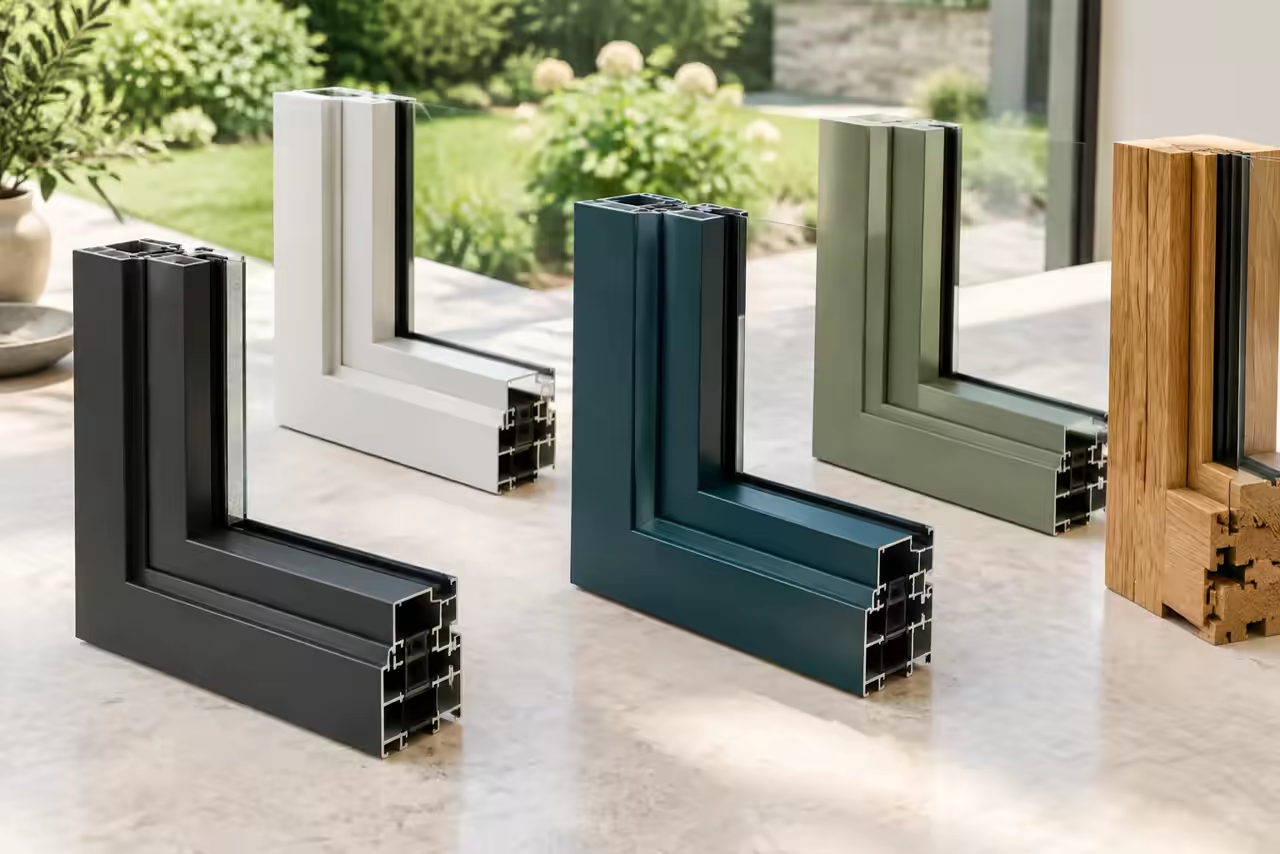
Examine a corner sample with joints, glazing beads and an opened . Printed grain repeats and embossed texture can look different close up from across the street. A smooth colour may also be a , so specify both the material and the finishing process rather than treating smooth as a construction type.
sash
sash: A sash is the framed part of a window that holds the glass; it often describes the moving part. In a sliding sash window, glazed sashes move vertically. The word alone does not identify the material, balance mechanism or cleaning action, so ask what the complete window description actually means. More on sashfoil
foil (woodgrain): A woodgrain foil is a decorative surface layer bonded to a profile, commonly used on uPVC windows and doors to imitate painted or stained timber. It describes the finish, not the frame material. Texture, colour, corner joints and matching trims all affect how convincing the result looks on a real building. More on foil (woodgrain)Check the complete finish package
Read the colour and finish guidance
Side by side
| Compared | Woodgrain foil | Smooth colour |
|---|---|---|
| Look and sightlines | A bonded film with an embossed or printed timber-style appearance. | An ungrained surface; sheen depends on the specified finish. |
| Maximum sizes | Depends on the product, not the colour — not applicable | Depends on the product, not the colour — not applicable |
| Thermal performance | Depends on the product, not the colour — not applicable | Depends on the product, not the colour — not applicable |
| Security standard | Depends on the product, not the colour — not applicable | Depends on the product, not the colour — not applicable |
| Ease of use | Woodgrain foilfoil (woodgrain): A woodgrain foil is a decorative surface layer bonded to a profile, commonly used on uPVC windows and doors to imitate painted or stained timber. It describes the finish, not the frame material. Texture, colour, corner joints and matching trims all affect how convincing the result looks on a real building. More on foil (woodgrain) | Smooth colour does not change how the window or door operates; test the specified product in a showroom. |
| Maintenance | Follow the finish supplier care guide for Woodgrain foilfoil (woodgrain): A woodgrain foil is a decorative surface layer bonded to a profile, commonly used on uPVC windows and doors to imitate painted or stained timber. It describes the finish, not the frame material. Texture, colour, corner joints and matching trims all affect how convincing the result looks on a real building. More on foil (woodgrain) | Follow the finish supplier care guide for Smooth colour; inspect a sample in daylight for marks and cleaning behaviour. |
| Expected lifespan | Depends on the product, not the colour — not applicable | Depends on the product, not the colour — not applicable |
| Typical price band | Depends on the product, not the colour — not applicable | Depends on the product, not the colour — not applicable |
| Best for | Timber-style detail without a painted timber surface. | Crisp contemporary detail or simple painted-style joinery. |
| Watch-outs | Inspect corner joints, repeats and opening edges. | Smooth does not identify the material or finishing process. |
Choose woodgrain foil if…
- you want timber-style texture without a real timber finish
- the actual finish is available and suitable for the site
- the inside face, hardware and trims have been checked
Choose smooth colour if…
- you prefer ungrained surfaces and simpler visual detail
- the actual finish is available and suitable for the site
- the inside face, hardware and trims have been checked
Three real scenarios
Replacing stained timber-style windows
Compare the actual grain and shade with the retained door. A trade oak name does not promise a match to existing timber.
Modern extension with crisp detailing
Smooth colour may support the clean frame layout. Confirm sheen beside aluminium doors so the finish does not differ unexpectedly.
Historic property needing authentic joinery
A film does not reproduce original timber joints or automatically meet heritage requirements. Repair or correctly specified timber may be the more appropriate route.
woodgrain
foil (woodgrain): A woodgrain foil is a decorative surface layer bonded to a profile, commonly used on uPVC windows and doors to imitate painted or stained timber. It describes the finish, not the frame material. Texture, colour, corner joints and matching trims all affect how convincing the result looks on a real building. More on foil (woodgrain)The team's verdict
Foil
foil (woodgrain): A woodgrain foil is a decorative surface layer bonded to a profile, commonly used on uPVC windows and doors to imitate painted or stained timber. It describes the finish, not the frame material. Texture, colour, corner joints and matching trims all affect how convincing the result looks on a real building. More on foil (woodgrain)Last reviewed:
Answered by the Windows & Doors Answered team. How we write answers · Corrections policy
Related
Ask a free question
Didn't find your answer? Ask the team. The team usually replies within one working day.