Guide
How to choose a front door
Free guidance. No fees. No sales calls.
Short answer
Choose a front door as a complete entrance: frame, leaf, glazing, locks, and installation. Start with security, exposure and everyday access, then choose appearance and material. Compare configured product evidence and try the hardware. Check how parcels, keys, ventilation and accessibility will work, and have the opening surveyed before approving the order.
threshold
threshold: A threshold is the bottom part of a door set that you cross when entering or leaving. It connects the door seals, drainage and floor levels. A low or visually flush threshold can make movement easier, but it still needs an appropriate weather detail and a properly planned external water route. More on thresholdPlanning this? Get a free, no-obligation installer recommendation
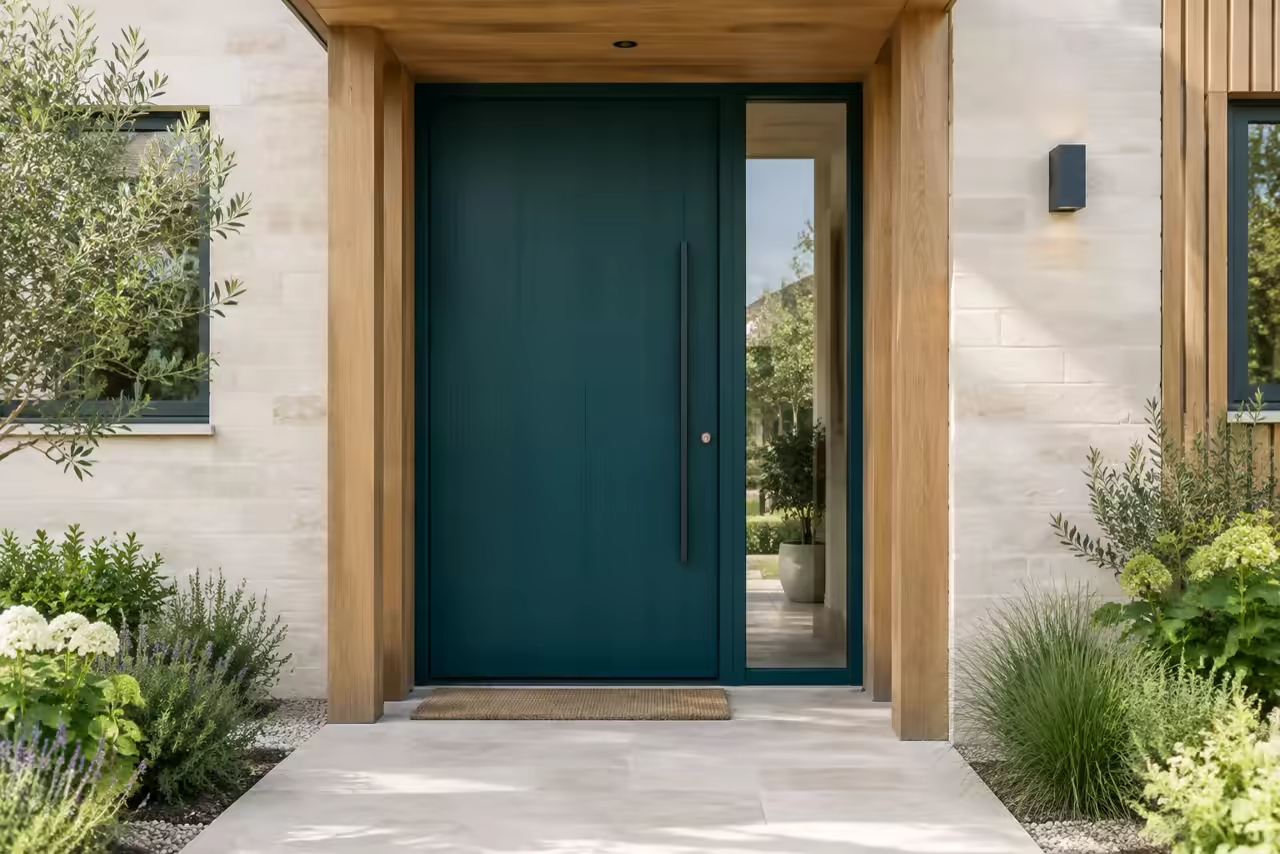
A front-door security answer considers protection; this guide also covers approach, weather, light, hardware and fitting. Aluminium, composite and other materials can suit different entrances. A pivot door changes the swing and clear passage, so assess it as an entrance layout rather than simply a larger-looking alternative to a conventional hinged leaf.
1. Map the entrance from street to hallway
Check the approach, steps, canopy, lighting and space inside for people and furniture. Plot the door swing and usable passage with the handle and any pivot position shown. Decide whether side lights or a glazed leaf improve a dark hall without sacrificing needed privacy. Identify whether lease, planning or heritage restrictions affect the proposed appearance.
2. Set security and everyday-use requirements
Ask about the tested complete door set, not just a lock brand. Check insurer requirements directly with your insurer. Try the handle, key, latch and multipoint action and consider the strength and reach of regular users. Decide on a letterplate, viewer, doorbell and parcels before ordering because factory-approved cut-outs and hardware arrangements may matter to performance.
Before moving on
- The swing and clear passage are drawn
- Regular users can operate the locks
- Letterplate and other accessories are specified
Print this page to use the checklist on the day.
3. Compare material, glass and exposure
Look at actual samples of aluminium and composite construction, surface finish and internal appearance. Ask for whole-door thermal and weather evidence for the configured entrance. Exposed sites may need different sealing, hardware or finish care. Glazing must suit safety, privacy and security needs; a decorative panel does not by itself establish resistance to forced entry or driving rain.
4. Check the surveyed entrance detail
Agree , , floor levels, seals and making good, including any alarm or doorbell wiring. Confirm handing from an explicitly stated viewing side. Record approved colour, hardware finish and glazing before manufacture. At handover, test opening, closing and locking with all occupants who need to use the door and keep adjustment and service instructions.
threshold
threshold: A threshold is the bottom part of a door set that you cross when entering or leaving. It connects the door seals, drainage and floor levels. A low or visually flush threshold can make movement easier, but it still needs an appropriate weather detail and a properly planned external water route. More on thresholdcill
cill: A cill is the lower projecting section beneath a window or door frame that helps shed rainwater away from the wall. It is also spelt sill. Its projection, joints and connection to the frame need to suit the wall construction, so water does not collect or run into vulnerable junctions. More on cillYour project checklist
- Check approach and hallway clearance
- Confirm insurer requirements
- Inspect complete door-set evidence
- Agree privacy glass
- Resolve and wiring
threshold
threshold: A threshold is the bottom part of a door set that you cross when entering or leaving. It connects the door seals, drainage and floor levels. A low or visually flush threshold can make movement easier, but it still needs an appropriate weather detail and a properly planned external water route. More on threshold - Test operation at handover
Print this page to use the checklist on the day.
What to do next
Make an entrance brief and compare representative doors in person. Ask for the exact configuration and hardware evidence with the quote. Arrange a survey covering the approach, opening, and wiring before approving the finished specification.
threshold
threshold: A threshold is the bottom part of a door set that you cross when entering or leaving. It connects the door seals, drainage and floor levels. A low or visually flush threshold can make movement easier, but it still needs an appropriate weather detail and a properly planned external water route. More on thresholdRelevant answers and comparisons
Useful tools
Questions people also ask
Is one material always most secure?
No. The complete tested door set, locks, glazing and installation matter more than a general material label.
Can a pivot door reduce usable access?
Its pivot position can take space from the apparent opening. Ask for the actual clear passage and compare it with the conventional hinged option.
Should I avoid a letterplate?
Not automatically. Choose a compatible arrangement and assess security, weather sealing and how you receive post alongside the rest of the door.
Last reviewed:
Answered by the Windows & Doors Answered team. How we write answers · Corrections policy
Related
Ask a free question
Didn't find your answer? Ask the team. The team usually replies within one working day.