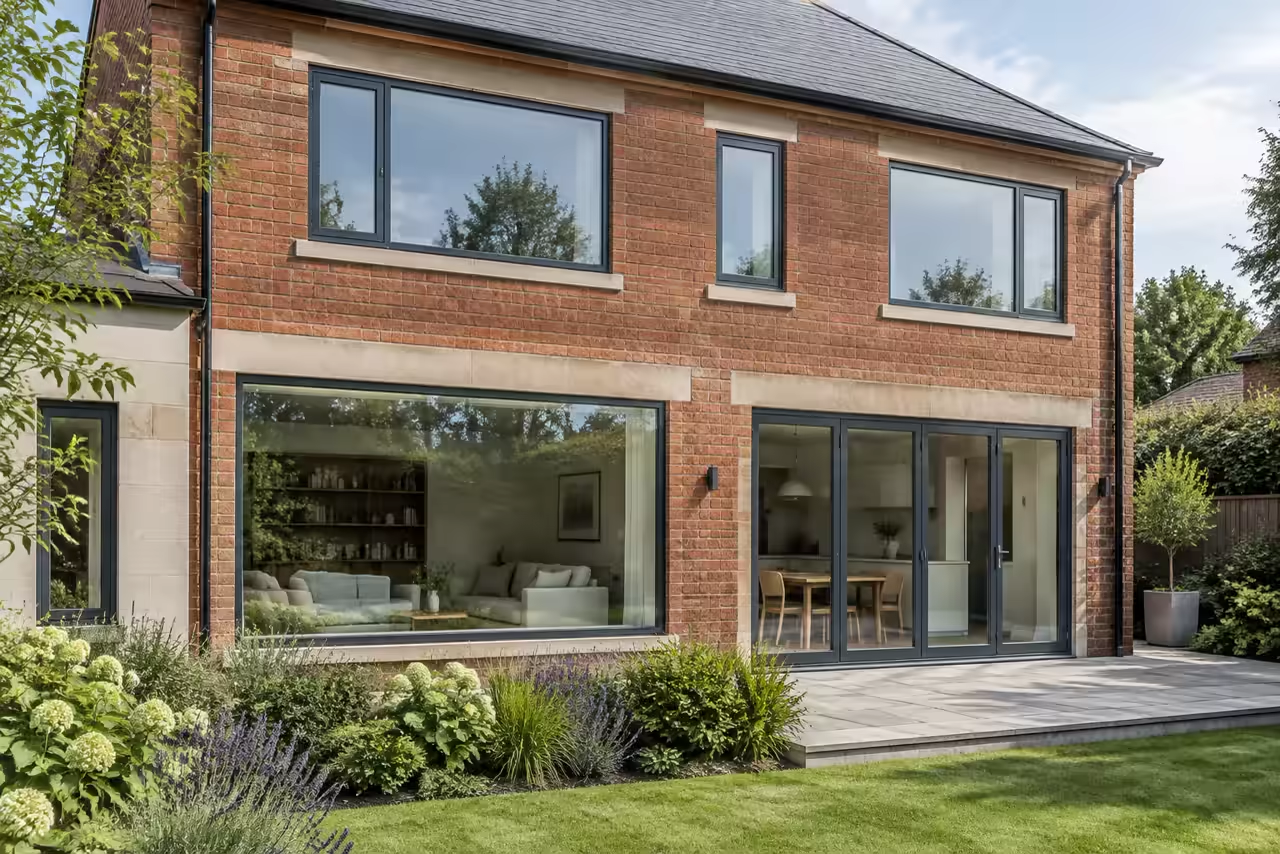
Comparison
Opening casement vs fixed picture windows: where should you keep glass sealed?
Short answer
Use fixed picture windows wherever you want maximum uninterrupted views, slimmer , lower cost and zero air leakage—provided another opening nearby satisfies ventilation and fire-escape rules. Use opening where you need everyday purge ventilation, an upstairs fire escape route or safe reach for cleaning exterior glass.
sightlines
sightline: A sightline is the visible width of frame you see when you look at a window or door. Slimmer sightlines mean more glass and less frame. Makers sometimes measure it differently, so compare drawings of the exact products, especially where fixed and opening panes sit side by side. More on sightlinecasements
casement: A casement is a hinged window opening, usually attached at the side or top of its frame. It opens rather than sliding vertically like a traditional sliding sash. The hinge position and opening direction affect ventilation, cleaning, clear passage and conflicts with paths, taps, curtains or furniture. More on casementPlanning this? Get a free, no-obligation installer recommendation
Daylight and airtightness advantages
Removing the inner opening strips out centimetres of frame around every edge, giving fixed picture windows noticeably more glass and cleaner views. With no perimeter opening gasket to compress or wear, sealed panes also eliminate draught risk.
sash
sash: A sash is the framed part of a window that holds the glass; it often describes the moving part. In a sliding sash window, glazed sashes move vertically. The word alone does not identify the material, balance mechanism or cleaning action, so ask what the complete window description actually means. More on sashBuilding Regulations: ventilation and fire escape
Every habitable room needs compliant background and purge ventilation, and upstairs bedrooms without a protected escape stair generally require an egress opening . Never turn every window in a bedroom or kitchen into fixed glass.
casement
casement: A casement is a hinged window opening, usually attached at the side or top of its frame. It opens rather than sliding vertically like a traditional sliding sash. The hinge position and opening direction affect ventilation, cleaning, clear passage and conflicts with paths, taps, curtains or furniture. More on casementCleaning access and cost savings
Ground-floor fixed panes are effortless to clean from outside and cut per-window cost by omitting hinges, handles and . Above ground floor, check that a window cleaner's reach-and-wash pole can access the pane safely.
multipoint locks
multipoint lock: A multipoint lock secures a door at several positions along the edge, using a linked mechanism operated by the handle or key. It can help engagement with the frame but does not guarantee security on its own. Cylinders, keeps, hinges, glazing and the tested door assembly all matter together. More on multipoint lockSide by side
| Compared | Casement windows | Fixed picture windows |
|---|---|---|
| Look and sightlines | Side-hung or top-hung sashessash: A sash is the framed part of a window that holds the glass; it often describes the moving part. In a sliding sash window, glazed sashes move vertically. The word alone does not identify the material, balance mechanism or cleaning action, so ask what the complete window description actually means. More on sashFlush casementsflush sash: A flush sash sits broadly level with the outer frame face when the window is closed, rather than overlapping it with a projecting external lip. It describes an appearance and frame relationship, not a material. A flush look does not establish weather performance, security or acceptance on a protected building. More on flush sash | Uninterrupted glass without an opening sashsash: A sash is the framed part of a window that holds the glass; it often describes the moving part. In a sliding sash window, glazed sashes move vertically. The word alone does not identify the material, balance mechanism or cleaning action, so ask what the complete window description actually means. More on sash |
| Maximum sizes | Varies by frame material and hinge capacity — ask your installer for the system's size limits. | Maximum widths and heights for Fixed picture windows depend on wind load and glass weight — confirm against the maker's size chart. |
| Thermal performance | Must meet building regulations. England, replacement windows: maximum U-valueU-value: A U-value describes how readily heat passes through a building element. A lower value means less heat loss through that element. For windows and doors, distinguish the complete assembly from the glass alone: a good glass figure does not establish the performance of the frame, edges and finished product. More on U-valueWindow Energy RatingWindow Energy Rating: A Window Energy Rating is a label assessing a window as a complete product, taking account of heat loss, solar gain and air leakage. It is not the same measurement as a glass U-value. Compare labels for the proposed window configuration and consider the room orientation alongside the rating. More on Window Energy RatingU-valueU-value: A U-value describes how readily heat passes through a building element. A lower value means less heat loss through that element. For windows and doors, distinguish the complete assembly from the glass alone: a good glass figure does not establish the performance of the frame, edges and finished product. More on U-valueU-valueU-value: A U-value describes how readily heat passes through a building element. A lower value means less heat loss through that element. For windows and doors, distinguish the complete assembly from the glass alone: a good glass figure does not establish the performance of the frame, edges and finished product. More on U-value | Must meet building regulations. England, replacement windows: maximum U-valueU-value: A U-value describes how readily heat passes through a building element. A lower value means less heat loss through that element. For windows and doors, distinguish the complete assembly from the glass alone: a good glass figure does not establish the performance of the frame, edges and finished product. More on U-valueWindow Energy RatingWindow Energy Rating: A Window Energy Rating is a label assessing a window as a complete product, taking account of heat loss, solar gain and air leakage. It is not the same measurement as a glass U-value. Compare labels for the proposed window configuration and consider the room orientation alongside the rating. More on Window Energy RatingU-valueU-value: A U-value describes how readily heat passes through a building element. A lower value means less heat loss through that element. For windows and doors, distinguish the complete assembly from the glass alone: a good glass figure does not establish the performance of the frame, edges and finished product. More on U-valueU-valueU-value: A U-value describes how readily heat passes through a building element. A lower value means less heat loss through that element. For windows and doors, distinguish the complete assembly from the glass alone: a good glass figure does not establish the performance of the frame, edges and finished product. More on U-value |
| Security standard | Check for PAS 24PAS 24: PAS 24 is a security test specification for complete windows and external door sets. It examines resistance to defined attack methods rather than promising that a product cannot be broken into. Evidence should relate to the actual system, configuration and hardware, not merely a lock or a broad product range. More on PAS 24casementcasement: A casement is a hinged window opening, usually attached at the side or top of its frame. It opens rather than sliding vertically like a traditional sliding sash. The hinge position and opening direction affect ventilation, cleaning, clear passage and conflicts with paths, taps, curtains or furniture. More on casement | No opening hardware; glass retention and the whole assembly still need checking. |
| Ease of use | Simple to open. Big side-hung sashessash: A sash is the framed part of a window that holds the glass; it often describes the moving part. In a sliding sash window, glazed sashes move vertically. The word alone does not identify the material, balance mechanism or cleaning action, so ask what the complete window description actually means. More on sash | No opening action; ventilation and any required escape route must be provided elsewhere. |
| Maintenance | Low; hinges benefit from an occasional check. | No hinges to service, but outside glass needs a safe cleaning route. |
| Expected lifespan | Guarantees vary by frame material: UK uPVC ranges such as Eurocell carry a minimum 10-year guarantee, while aluminium ranges such as Origin offer up to 20 years (location-dependent). | Service life for Fixed picture windows depends on exposure, specification and care — ask for the written frame, finish and hardware warranties. |
| Typical price band | Per window: uPVC £580 to £1,310 (white uPVC to install) and aluminium £750 to £1,750 (Homebuilding & Renovating, last updated 23 Apr 2025; checked 25 Nov 2026) (typical published UK range, supplied and fitted). | Installed cost for Fixed picture windows varies with size, glazing and site access — compare two or three itemised written quotes. |
| Best for | Cottages, most modern homes, and anywhere you want good airflow and easy escape openings. | Framing a landscape where nearby openings already provide fresh air and access. |
| Watch-outs | Opening sashessash: A sash is the framed part of a window that holds the glass; it often describes the moving part. In a sliding sash window, glazed sashes move vertically. The word alone does not identify the material, balance mechanism or cleaning action, so ask what the complete window description actually means. More on sash | Cannot be opened to cool a room, pass objects out or reach the outside glass. |
Figures from published manufacturer data, building regulations and UK cost guides. Your price will depend on your project.
Prices are published guide figures from the sources listed, not our own quotes. Installed prices vary by UK region, access, glazing specification and making good.
- Pilkington UK — Part L England existing dwellings guidance (Part L 2021 (in force June 2022)) — checked
- REHAU — Part L existing dwellings fact sheet (PDF) (2022 edition) — checked
- British Woodworking Federation — Part L new dwellings summary (2022 Part L update) — checked
- Pilkington UK — Scottish Building Standards Section 6 domestic guidance (2022/2023 Scottish Technical Handbook) — checked
- Eurocell — uPVC & aluminium windows guarantee (undated manufacturer page) — checked
- Origin Global — Up to 20-year guarantee page (undated manufacturer guarantee page) — checked
- Homebuilding & Renovating — New window costs (last updated 23 Apr 2025) — checked
Choose casement windows if…
- The room needs fresh-air purge ventilation or an upstairs Part B fire escape.
- You want to clean exterior glass safely from indoors using easy-clean hinges.
- You are matching traditional opening rhythm on a period elevation.
sash
sash: A sash is the framed part of a window that holds the glass; it often describes the moving part. In a sliding sash window, glazed sashes move vertically. The word alone does not identify the material, balance mechanism or cleaning action, so ask what the complete window description actually means. More on sash
Choose fixed picture windows if…
- You are framing a garden, valley or coastal view with minimal interrupting frame.
- Another nearby door or already covers ventilation and escape rules.
casement
casement: A casement is a hinged window opening, usually attached at the side or top of its frame. It opens rather than sliding vertically like a traditional sliding sash. The hinge position and opening direction affect ventilation, cleaning, clear passage and conflicts with paths, taps, curtains or furniture. More on casement - You want lower unit cost, tighter airtightness and zero moving hardware to wear.
Three real scenarios
Rural kitchen extension facing open hills
Pair one wide fixed picture pane over the view with a smaller side opening for steam purge.
casement
casement: A casement is a hinged window opening, usually attached at the side or top of its frame. It opens rather than sliding vertically like a traditional sliding sash. The hinge position and opening direction affect ventilation, cleaning, clear passage and conflicts with paths, taps, curtains or furniture. More on casementFirst-floor guest bedroom
Keep at least one egress-hinged opening so the room remains fully compliant for fire escape.
casement
casement: A casement is a hinged window opening, usually attached at the side or top of its frame. It opens rather than sliding vertically like a traditional sliding sash. The hinge position and opening direction affect ventilation, cleaning, clear passage and conflicts with paths, taps, curtains or furniture. More on casementDouble-height stairwell landing
A sealed fixed picture window floods the landing with light safely without unreachable handles.
The team's verdict
Use fixed picture windows for cleaner views, lower cost and tighter seals wherever a neighbouring door or handles ventilation, fire escape and cleaning access.
casement
casement: A casement is a hinged window opening, usually attached at the side or top of its frame. It opens rather than sliding vertically like a traditional sliding sash. The hinge position and opening direction affect ventilation, cleaning, clear passage and conflicts with paths, taps, curtains or furniture. More on casementQuestions people also ask
Are fixed picture windows noticeably cheaper than opening casements?
Yes—omitting , hinges, handles and multipoint locking reduces fabrication cost and improves whole-window .
sashes
sash: A sash is the framed part of a window that holds the glass; it often describes the moving part. In a sliding sash window, glazed sashes move vertically. The word alone does not identify the material, balance mechanism or cleaning action, so ask what the complete window description actually means. More on sashU-values
U-value: A U-value describes how readily heat passes through a building element. A lower value means less heat loss through that element. For windows and doors, distinguish the complete assembly from the glass alone: a good glass figure does not establish the performance of the frame, edges and finished product. More on U-valueCan a fixed picture window be fitted upstairs?
Yes, provided the room still has compliant ventilation and fire escape elsewhere and you have a practical way to clean the outside glass.
Do fixed picture windows still need trickle vents?
Part F background ventilation rules can still require on replacement frames unless an alternative compliant ventilation system exists.
trickle vents
trickle vent: A trickle vent is a small controllable opening intended to provide background ventilation through or near a window frame. It is different from opening the sash and does not replace extraction where that is needed. Whether vents are required depends on the building, ventilation strategy and applicable rules, not appearance alone. More on trickle ventDo fixed panes look different next to opening casements?
In standard systems, fixed panes sit slimmer than opening unless you specify dummy or uniform- designs.
sashes
sash: A sash is the framed part of a window that holds the glass; it often describes the moving part. In a sliding sash window, glazed sashes move vertically. The word alone does not identify the material, balance mechanism or cleaning action, so ask what the complete window description actually means. More on sashsashes
sash: A sash is the framed part of a window that holds the glass; it often describes the moving part. In a sliding sash window, glazed sashes move vertically. The word alone does not identify the material, balance mechanism or cleaning action, so ask what the complete window description actually means. More on sashsightline
sightline: A sightline is the visible width of frame you see when you look at a window or door. Slimmer sightlines mean more glass and less frame. Makers sometimes measure it differently, so compare drawings of the exact products, especially where fixed and opening panes sit side by side. More on sightlineLast reviewed:
Answered by the Windows & Doors Answered team. How we write answers · Corrections policy
Related
Ask a free question
Didn't find your answer? Ask the team. The team usually replies within one working day.