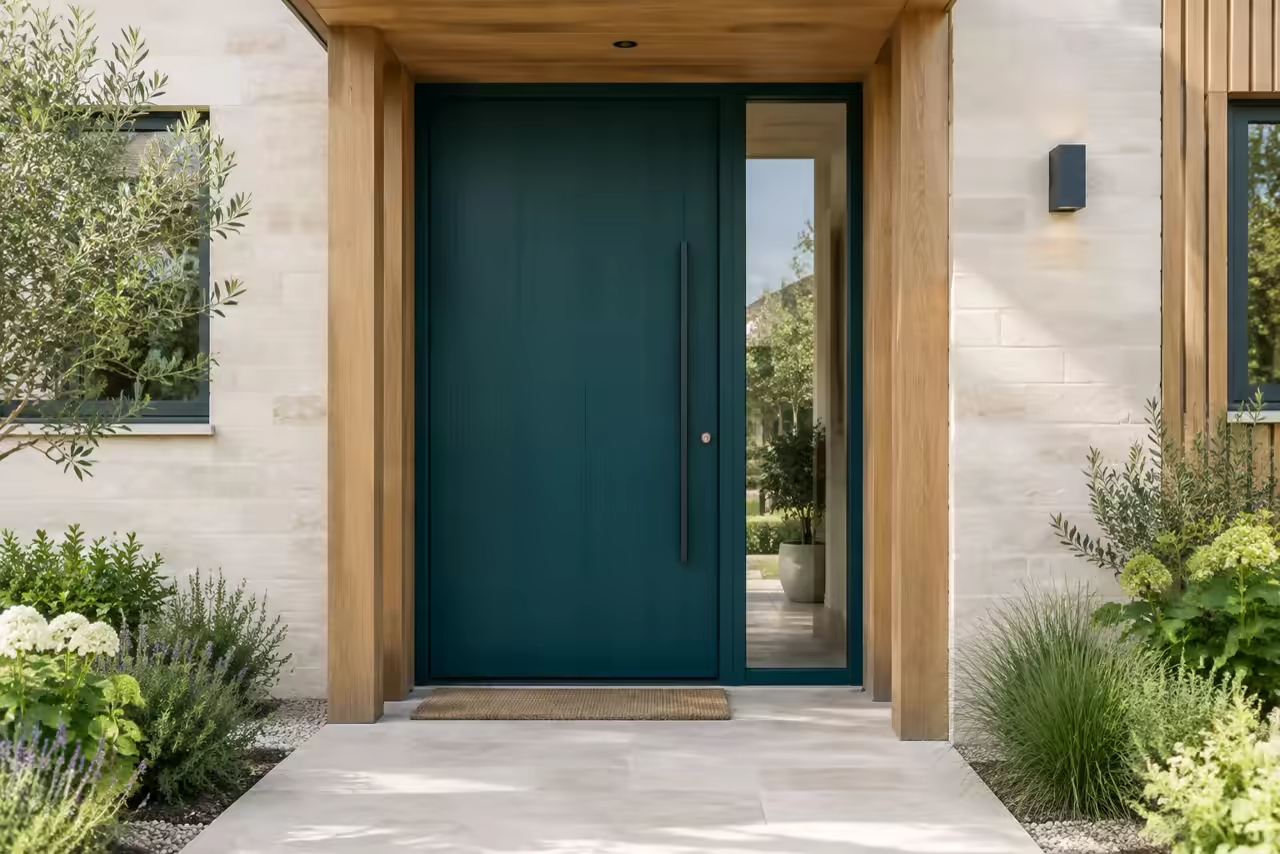
Comparison
uPVC vs composite front doors: which is better value for a UK home?
Short answer
Choose a composite front door for most main entrances: its solid or high-density core feels noticeably heavier, holds dark finishes well and resists knocking or flexing. Choose a reinforced uPVC door when keeping upfront spend low on a side, utility or back entrance matters more than front-door presence.
woodgrain
foil (woodgrain): A woodgrain foil is a decorative surface layer bonded to a profile, commonly used on uPVC windows and doors to imitate painted or stained timber. It describes the finish, not the frame material. Texture, colour, corner joints and matching trims all affect how convincing the result looks on a real building. More on foil (woodgrain)Planning this? Get a free, no-obligation installer recommendation
Core construction and everyday feel
Standard uPVC panel doors use a thin foam-filled plastic panel held inside a uPVC outer , which keeps weight down but can sound hollow when knocked. Composite doors bond a glass-reinforced plastic or similar skin over an insulated foam or laminated timber core, giving a firmer close and better acoustic damping.
sash
sash: A sash is the framed part of a window that holds the glass; it often describes the moving part. In a sliding sash window, glazed sashes move vertically. The word alone does not identify the material, balance mechanism or cleaning action, so ask what the complete window description actually means. More on sashWeathering, bowing and dark colours
Both uPVC outer frames and composite slabs expand in direct summer sun if poorly reinforced or badly adjusted. Ask every supplier for the door's thermal movement tolerance, hinge adjustability and written warranty on dark external skins facing south or west.
Security hardware and quote comparisons
Either door type can be supplied to with a 3-star anti-snap cylinder, yet entry-level uPVC panels are easier to flex if the infill panel lacks reinforcement. Check that quotes specify the cylinder rating, brand and low- weather sealing identically.
PAS 24
PAS 24: PAS 24 is a security test specification for complete windows and external door sets. It examines resistance to defined attack methods rather than promising that a product cannot be broken into. Evidence should relate to the actual system, configuration and hardware, not merely a lock or a broad product range. More on PAS 24multi-point lock
multipoint lock: A multipoint lock secures a door at several positions along the edge, using a linked mechanism operated by the handle or key. It can help engagement with the frame but does not guarantee security on its own. Cylinders, keeps, hinges, glazing and the tested door assembly all matter together. More on multipoint lockthreshold
threshold: A threshold is the bottom part of a door set that you cross when entering or leaving. It connects the door seals, drainage and floor levels. A low or visually flush threshold can make movement easier, but it still needs an appropriate weather detail and a properly planned external water route. More on thresholdRelated pages on this topic
Side by side
| Compared | uPVC doors | Composite front doors |
|---|---|---|
| Look and sightlines | Wider frames than aluminium; timber-look foilsfoil (woodgrain): A woodgrain foil is a decorative surface layer bonded to a profile, commonly used on uPVC windows and doors to imitate painted or stained timber. It describes the finish, not the frame material. Texture, colour, corner joints and matching trims all affect how convincing the result looks on a real building. More on foil (woodgrain) | Moulded skins in traditional and modern styles, often with woodgrainfoil (woodgrain): A woodgrain foil is a decorative surface layer bonded to a profile, commonly used on uPVC windows and doors to imitate painted or stained timber. It describes the finish, not the frame material. Texture, colour, corner joints and matching trims all affect how convincing the result looks on a real building. More on foil (woodgrain) |
| Maximum sizes | Maximum widths and heights for uPVC doors depend on wind load and glass weight — confirm against the maker's size chart. | Maximum widths and heights for Composite front doors depend on wind load and glass weight — confirm against the maker's size chart. |
| Thermal performance | Must meet building regulations. England, replacement doors over 60% glazed: maximum 1.4 W/m²K or DSERDSER: DSER means Door Set Energy Rating. It assesses an external door set as a complete assembly rather than judging the door glass on its own. The rating takes account of energy performance, including heat loss and air leakage. Ask whether the label covers the exact leaf, frame and glazing proposed. More on DSERU-valueU-value: A U-value describes how readily heat passes through a building element. A lower value means less heat loss through that element. For windows and doors, distinguish the complete assembly from the glass alone: a good glass figure does not establish the performance of the frame, edges and finished product. More on U-value | Must meet building regulations. England, replacement doors (60% glazed or less): maximum 1.4 W/m²K or band B. England, new homes: limiting 1.6 W/m²K (notional 1.0). Scotland: maximum 1.4 W/m²K. |
| Security standard | Look for PAS 24PAS 24: PAS 24 is a security test specification for complete windows and external door sets. It examines resistance to defined attack methods rather than promising that a product cannot be broken into. Evidence should relate to the actual system, configuration and hardware, not merely a lock or a broad product range. More on PAS 24 | Verify PAS 24PAS 24: PAS 24 is a security test specification for complete windows and external door sets. It examines resistance to defined attack methods rather than promising that a product cannot be broken into. Evidence should relate to the actual system, configuration and hardware, not merely a lock or a broad product range. More on PAS 24Secured by DesignSecured by Design: Secured by Design is a police security initiative that includes an approval scheme for products such as windows and doors. It is not a general guarantee against crime. Check the current listing for the proposed product and distinguish product approval from wider recommendations about the design of a building. More on Secured by Design |
| Ease of use | Fine on smaller doors; large uPVC doors can drop or need adjusting. | Solid feel; good weather sealing. |
| Maintenance | Wipe clean; hinges may need adjusting over the years. | Low; dark colours on sunny elevations need checking with the maker. |
| Expected lifespan | Service life for uPVC doors depends on exposure, specification and care — ask for the written frame, finish and hardware warranties. | Rockdoor and Solidor both publish 10-year composite door guarantees (Rockdoor: 10 years on sashsash: A sash is the framed part of a window that holds the glass; it often describes the moving part. In a sliding sash window, glazed sashes move vertically. The word alone does not identify the material, balance mechanism or cleaning action, so ask what the complete window description actually means. More on sash |
| Typical price band | Standard uPVC external doors: £400 to £1,000+ (Checkatrade door installation guide, last updated Feb 2026; checked 25 Nov 2026) (typical published UK range, supplied and fitted). | New front doors: typically £1,000 to £2,000, averaging around £1,500, with bespoke designs above £2,000 (MyBuilder front door guide, last updated 21 Aug 2026; checked 25 Nov 2026) (typical published UK range, supplied and fitted). |
| Best for | Standard-sized back and side doors on a budget. | Traditional and cottage-style front doors on a sensible budget. |
| Watch-outs | Large panes and wide openings push uPVC towards its limits. | Quality varies widely; dark doors in full sun can move slightly. |
Figures from published manufacturer data, building regulations and UK cost guides. Your price will depend on your project.
Prices are published guide figures from the sources listed, not our own quotes. Installed prices vary by UK region, access, glazing specification and making good.
- Pilkington UK — Part L England existing dwellings guidance (Part L 2021 (in force June 2022)) — checked
- REHAU — Part L existing dwellings fact sheet (PDF) (2022 edition) — checked
- British Woodworking Federation — Part L new dwellings summary (2022 Part L update) — checked
- Pilkington UK — Scottish Building Standards Section 6 domestic guidance (2022/2023 Scottish Technical Handbook) — checked
- Checkatrade — Door installation costs guide (last updated Feb 2026) — checked
- Rockdoor — Composite door guarantee terms (undated manufacturer guarantee page) — checked
- Solidor — Care and 10-year guarantee guide (PDF) (undated manufacturer guide) — checked
- MyBuilder — New front door price guide (last updated 21 Aug 2026) — checked
Choose upvc doors if…
- Back, side or utility entrances where lowest purchase cost leads the brief.
- Rental properties needing quick, economical replacement in standard white.
- Simple glazed rear doors matching existing uPVC windows.
Choose composite front doors if…
- Main street-facing front doors where kerb appeal and solid closing weight matter.
- Dark heritage colours such as black, navy or racing green on sunny porches.
- Homes prioritising stronger security hardware and thicker insulated slabs.
PAS 24
PAS 24: PAS 24 is a security test specification for complete windows and external door sets. It examines resistance to defined attack methods rather than promising that a product cannot be broken into. Evidence should relate to the actual system, configuration and hardware, not merely a lock or a broad product range. More on PAS 24
Three real scenarios
Victorian terrace main entrance
A timber-core or dense composite door with traditional recessed moulding and a 3-star lock looks far more authentic from the pavement.
Side alley utility door
A reinforced uPVC half-glazed door keeps costs sensible while letting natural daylight into a narrow kitchen or utility room.
South-facing porchless front wall
Specify a composite slab with documented thermal-movement protection and light or shaded colour choice to minimise summer bowing.
The team's verdict
Composite wins for most main front entrances on solidity, finish and security feel; uPVC remains the practical budget choice for secondary and rear doors.
Questions people also ask
Do composite doors last longer than uPVC front doors?
Quality composite slabs generally hold their rigidity and coloured surface longer than basic uPVC panel doors, though hardware quality and correct fitting govern both.
Are composite doors warmer than uPVC doors?
Thicker insulated composite slabs normally achieve lower whole-door than thin infill uPVC panels, though exact figures depend on glazing area.
U-values
U-value: A U-value describes how readily heat passes through a building element. A lower value means less heat loss through that element. For windows and doors, distinguish the complete assembly from the glass alone: a good glass figure does not establish the performance of the frame, edges and finished product. More on U-valueDo composite doors still use a uPVC outer frame?
Many UK composite doors sit in a steel-reinforced uPVC outer frame, while higher-tier options pair the slab with an aluminium frame.
Is a composite door worth the extra cost on a back door?
Only if the back entrance is exposed, heavily used or security-critical; otherwise a reinforced glazed uPVC door often represents better value.
Last reviewed:
Answered by the Windows & Doors Answered team. How we write answers · Corrections policy
Related
Ask a free question
Didn't find your answer? Ask the team. The team usually replies within one working day.